

Decorative Cords for Window Treatments
A practical look at decorative cords used in window treatments, including common cord structures, typical applications, and the visual difference between self welt and contrast welt.
Details focus on the small elements that shape the quality and character of custom window treatments, including trims, banding, hems, linings, seams, edge finishes, and material choices.
A practical look at decorative cords used in window treatments, including common cord structures, typical applications, and the visual difference between self welt and contrast welt.

A practical look at decorative borders used in window treatments, including common styles, placement on drapery and Roman shades, visual effects, and corner and junction treatments.

A practical look at common decorative fringes used in window treatments, including tassel, pom-pom, bullion, beaded, and skirt fringes, with examples of applications, visual weight, and a simple note on finishing fringe ends.

An overview of decorative details in custom window treatments, including trims, fabric banding, cords, fringes, tassels, and applied details. This guide explores common terminology, applications, and how these elements influence proportion, texture, and the final look.
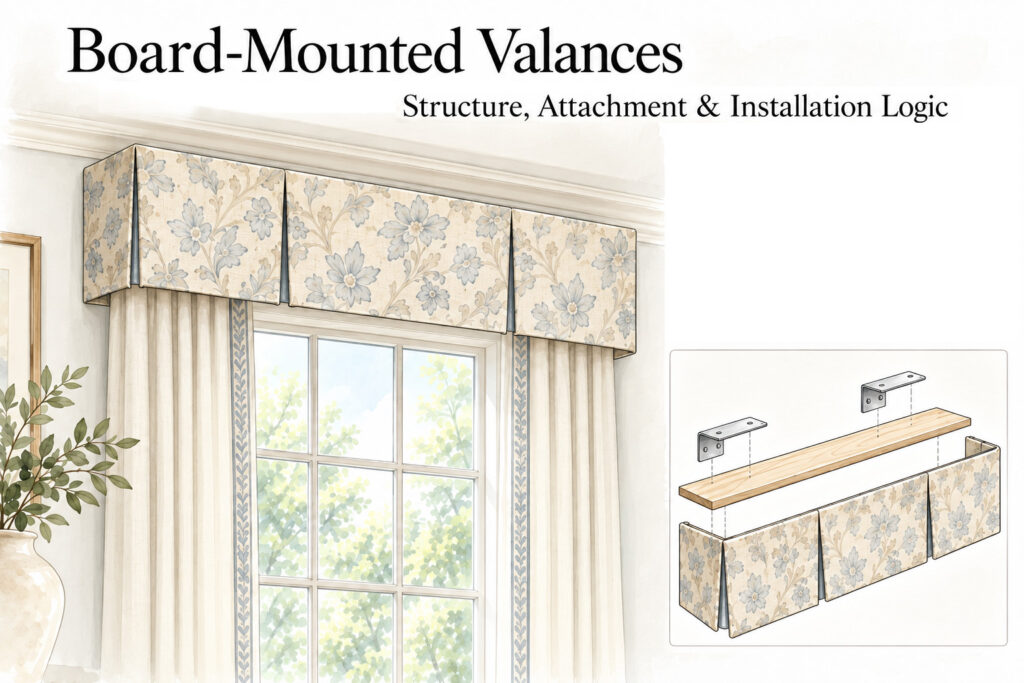
Board-mounted valances can be constructed and attached in several different ways. This guide looks at mounting boards, stapled and hook-and-loop attachment methods, aluminum valance tracks, and how projection, return, and clearance affect the finished treatment.
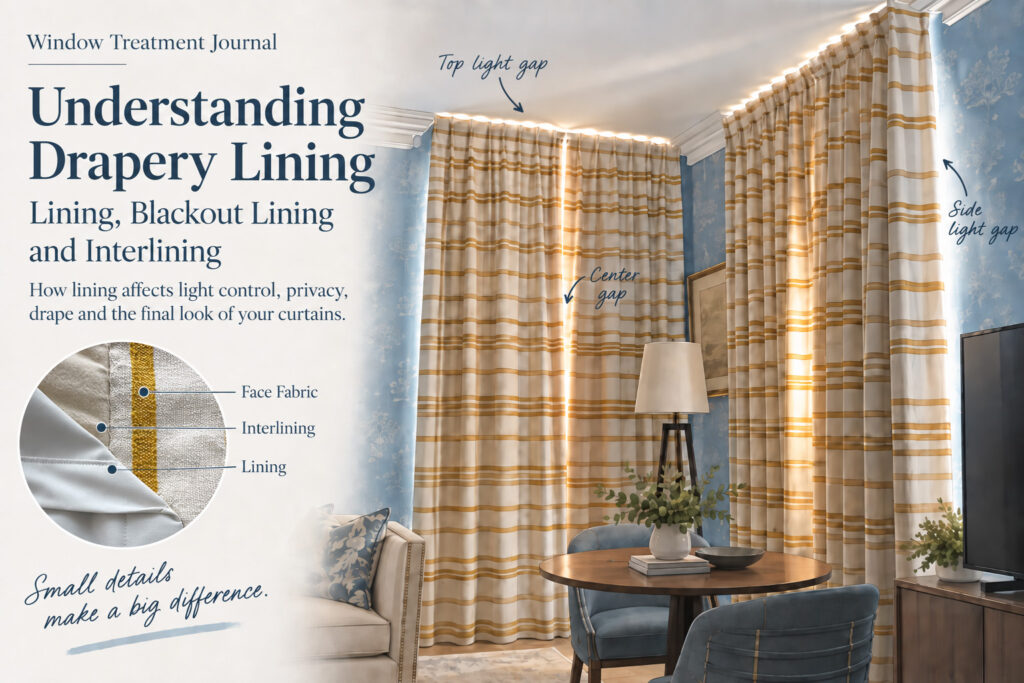
Explore the differences between standard lining, blackout lining, and interlining, and learn how fiber content, weight, width, color, finish, and construction can affect the final look and performance of drapery.
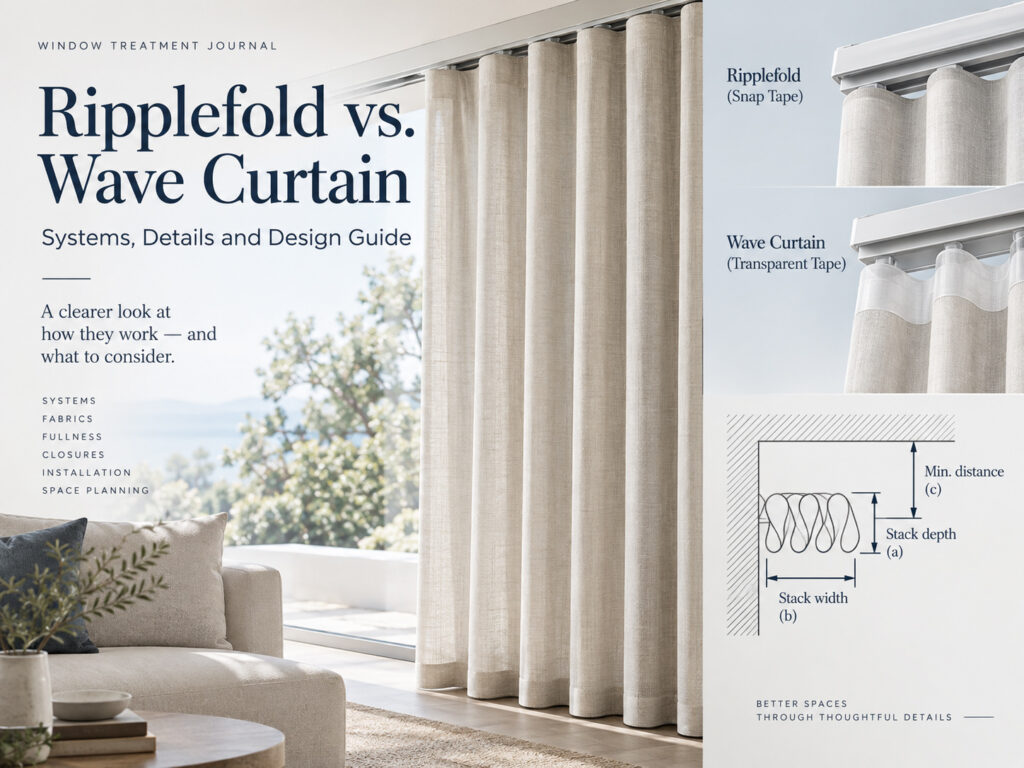
A closer look at two common wave-style drapery systems—Snap Tape Ripplefold and Transparent Wave Tape—including fabric suitability, closure options, spacing, fullness, stackback, and installation depth.
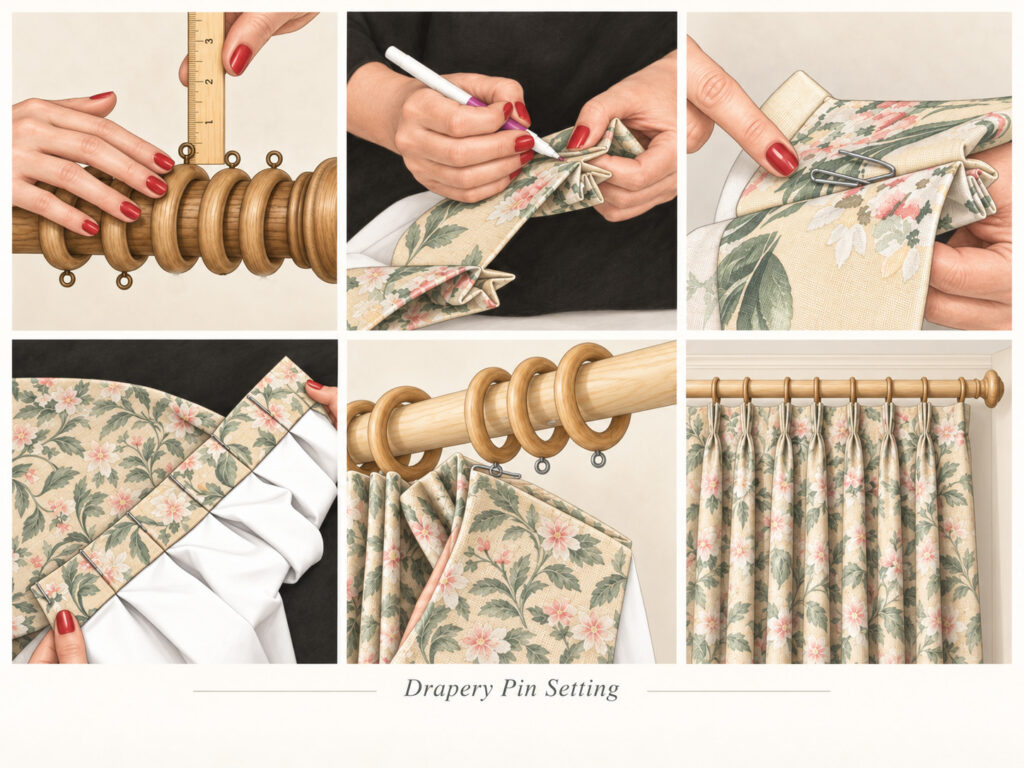
A closer look at drapery pin setting—how hook position relates to the actual hanging point, different hardware systems, and the finished position of a pleated curtain.
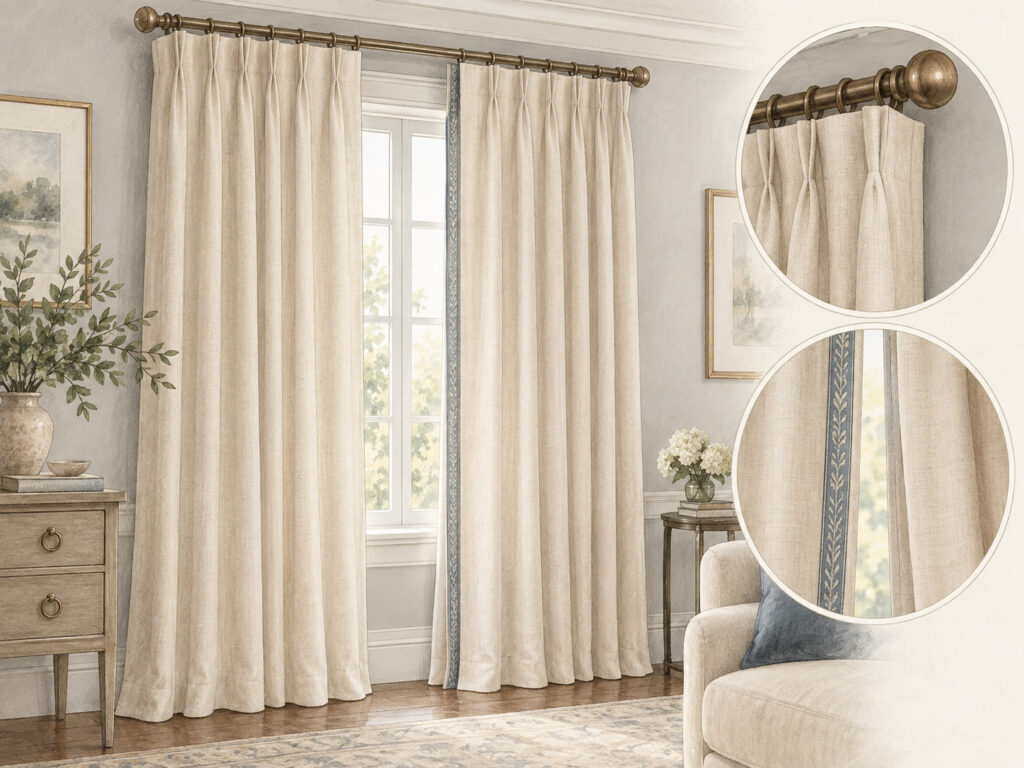
A visual reference to drapery side edges and leading edges, including pinned and unpinned finishes, returns, decorative treatments, and different types of overlap on decorative rods and traverse tracks.
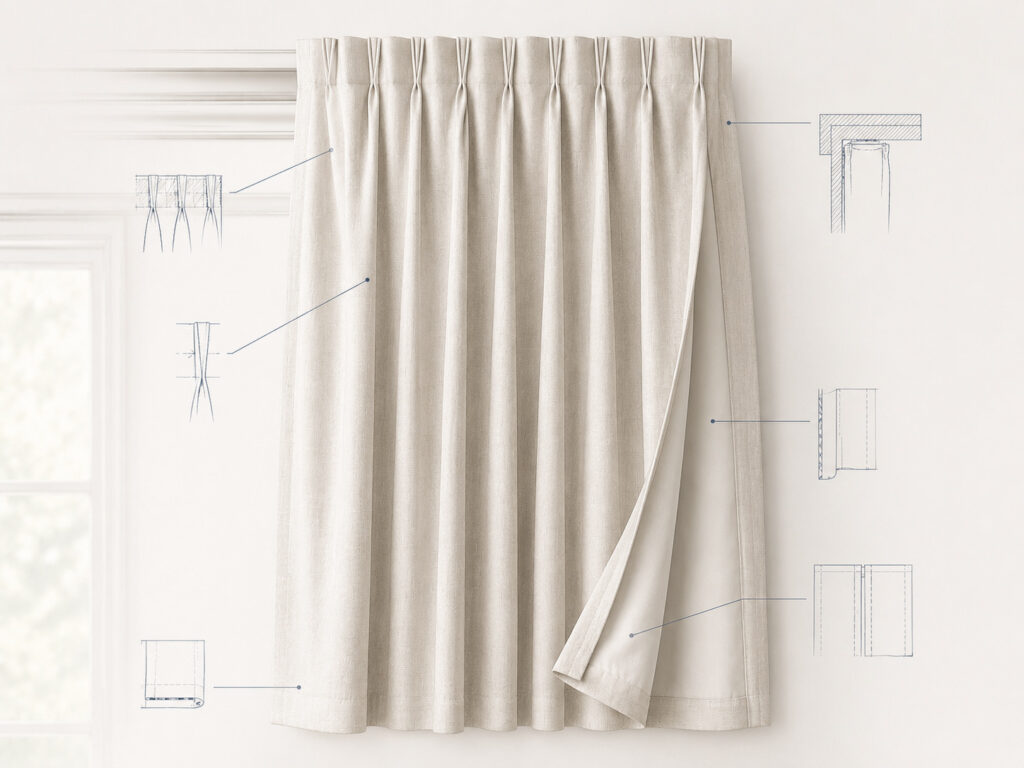
A visual guide to the key parts of a custom drapery panel, including heading, leading edge, side hem, return, overlap, lining, and interlining—and how these terms relate to construction and installation.