
Choosing drapery is not only about fabric, color, or heading style. The way a treatment relates to the window, floor, opening direction, and other layers can change both its appearance and function.
This visual guide separates those decisions into a few simple categories, making it easier to compare options and think through how a drapery treatment should work within a space.
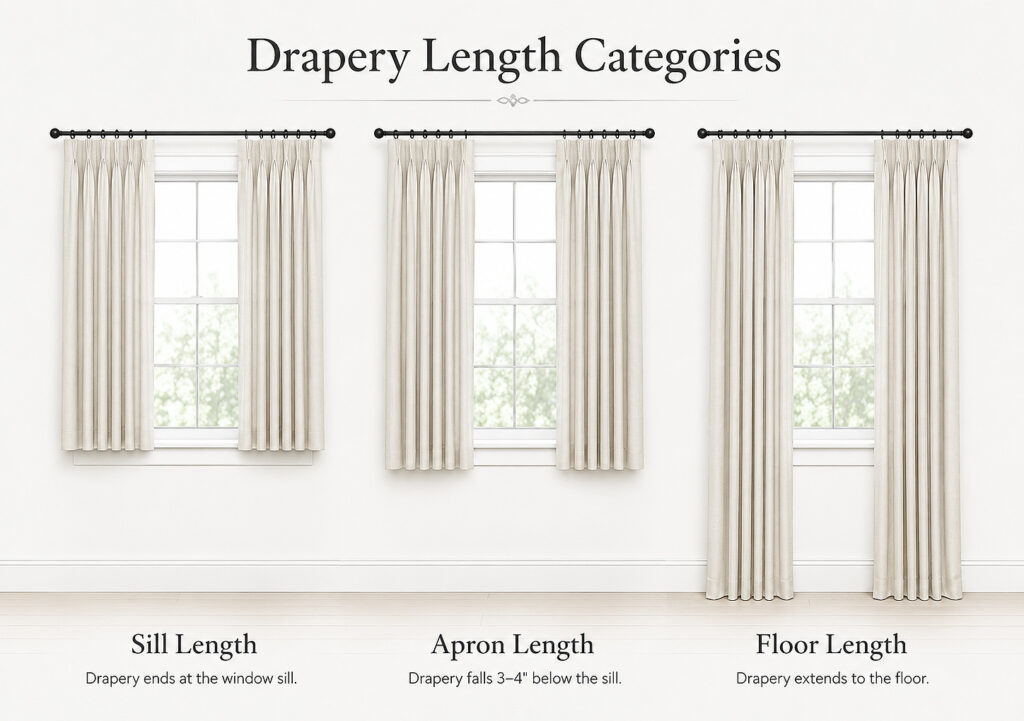
Drapery Length Categories
Drapery length affects the proportion of the window and the way the treatment relates to the architecture around it.
Shorter lengths can be practical where furniture, built-ins, radiators, counters, or other conditions make floor-length panels less suitable. They also tend to create a lighter and more casual visual effect.
Floor-length drapery creates a stronger vertical line and is often used when the goal is to visually extend the height of the room or give the window a more finished architectural presence.
The right choice is not determined by window size alone. Furniture placement, wall space, function, and the overall character of the room should all be considered.
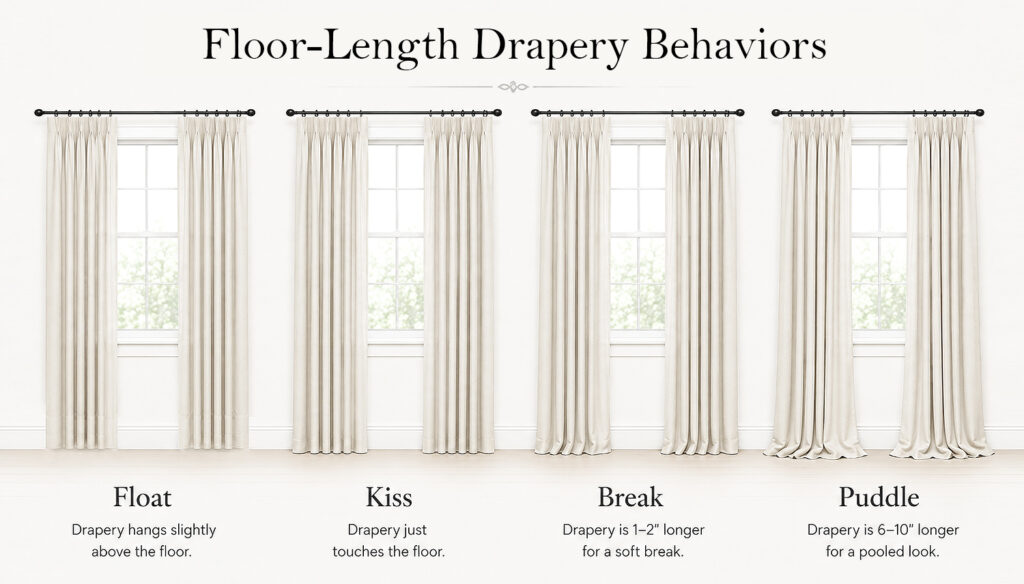
Floor-Length Drapery Behaviors
Once full-length drapery is selected, even a small difference at the hem can noticeably change the finished look.
A hem that stops slightly above the floor feels clean and controlled. A hem that just meets the floor creates a precise, tailored appearance. Additional length introduces softness and movement, while a more generous puddle creates a distinctly decorative effect.
Fabric behavior also matters. A crisp or heavy fabric may respond very differently from a soft linen or fluid sheer, even when both are ordered to the same nominal length.
For this reason, floor treatment should be considered as part of the design rather than simply as a measurement detail.
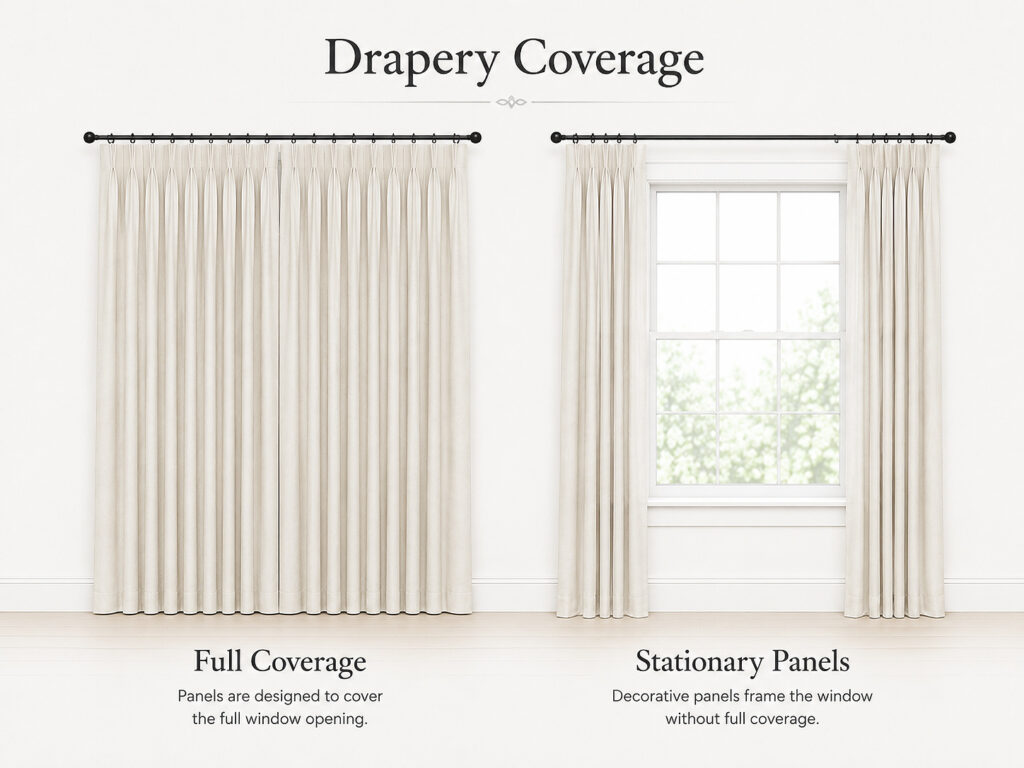
Drapery Coverage
Coverage determines whether the drapery is expected to perform as a functional treatment or mainly as a visual frame.
Full-coverage drapery requires enough fabric and hardware capacity to travel across the opening. This affects fullness, stack-back, wall space, and sometimes the position of nearby furniture.
Stationary panels work differently. Their role is often to introduce fabric, frame the window, soften architectural edges, or create stronger vertical proportions without requiring the drapery itself to close.
This distinction is especially useful when another layer is already providing privacy or light control.
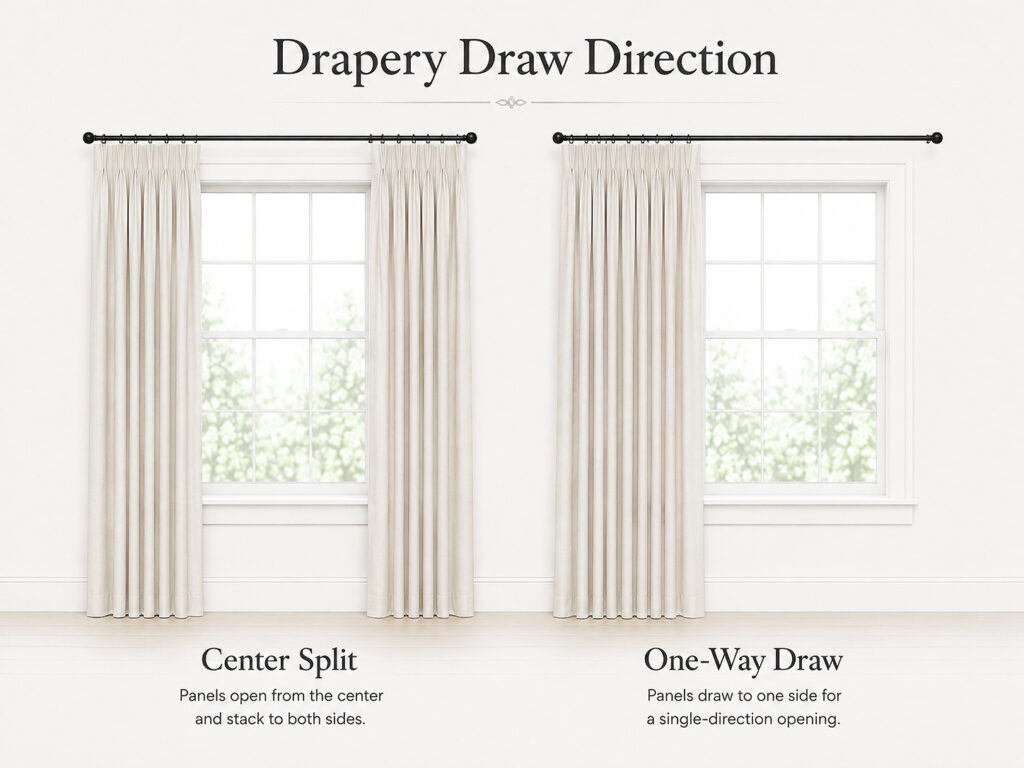
Drapery Draw Direction
Opening direction is often influenced by the way a room is used.
A center split creates visual symmetry and works naturally with many balanced window arrangements. A one-way draw can be more practical where access, furniture placement, door movement, or the view favors one side of the opening.
For wide doors and frequently used openings, draw direction can have a significant impact on daily usability.
It is therefore worth considering movement through the room before deciding where the drapery should stack.
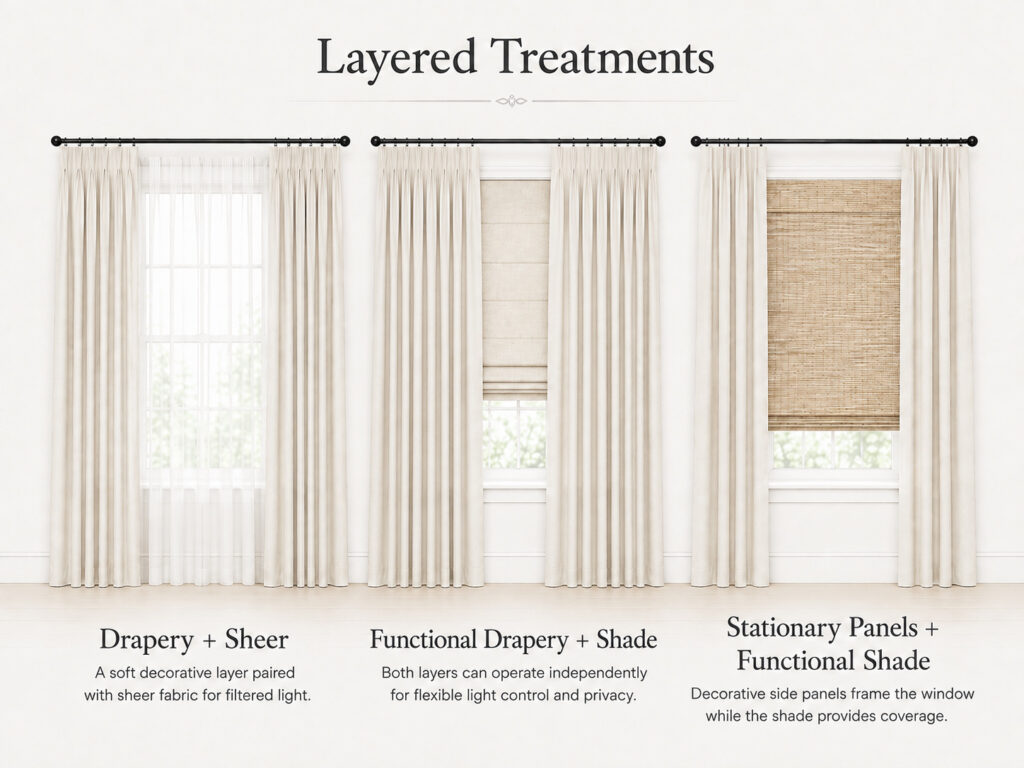
Layered Treatments
Layering allows different window treatments to perform different jobs.
A sheer can soften daylight while maintaining a light visual presence. A shade can provide privacy or stronger light control. Drapery can then add softness, scale, texture, and architectural framing.
In some layered treatments, both the drapery and the inner shade are functional. In others, the side panels remain stationary while the shade performs most of the daily operation.
Separating decorative and functional roles can often simplify the design. It allows each layer to do one job well rather than asking a single treatment to solve every requirement.
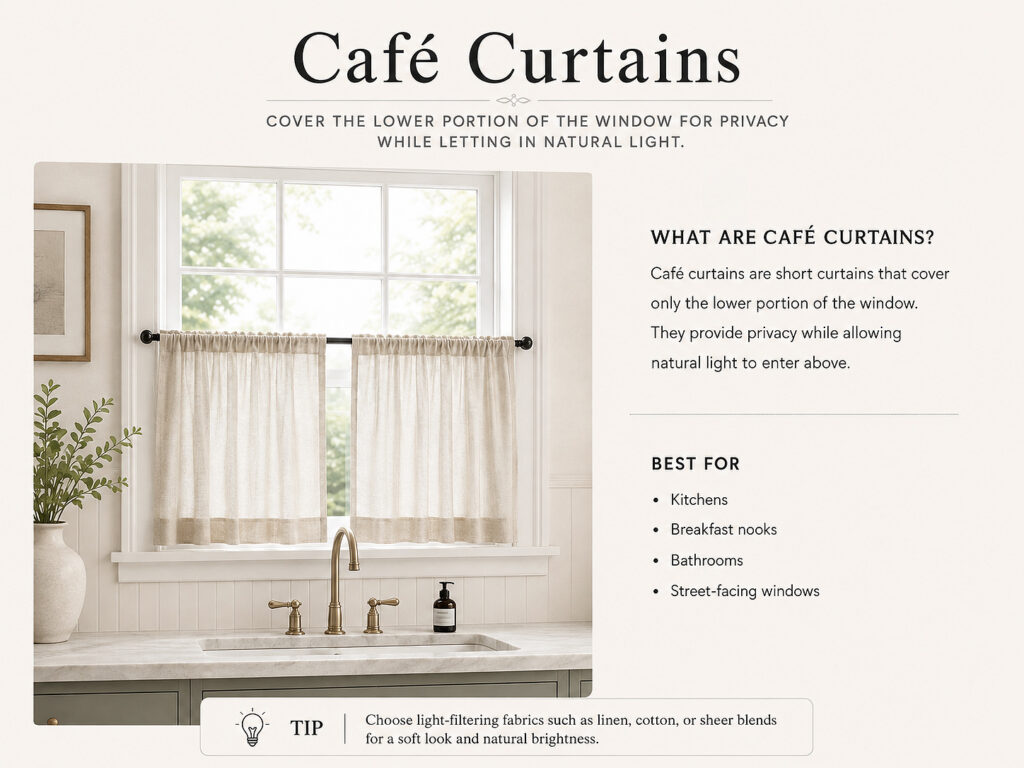
Café Curtains
Café curtains are a useful exception to the usual full-window drapery approach.
Rather than covering the entire opening, they provide privacy at the lower portion of the window while keeping the upper area open to daylight and view.
This makes them especially suitable for spaces where privacy and natural light need to coexist, such as kitchens, breakfast areas, bathrooms, and street-facing rooms.
Their scale and placement also give them a more relaxed character than conventional full-height drapery.
Looking at the Window as a System
Length, floor behavior, coverage, draw direction, and layering are separate decisions, but they work together.
A treatment may be floor length but stationary. It may provide full coverage and open from the center. It may be decorative on the outside and functional on the inside. The same window can support several different combinations depending on how the room needs to perform.
Thinking through these decisions individually makes it easier to build a treatment that feels intentional rather than simply selecting a drapery style as a single package.
The goal is not to follow one fixed rule, but to understand how each choice changes the balance between proportion, function, movement, and visual character.
Related Reading
If you would like to explore these design decisions further, you may also find these guides useful:
- Understanding Drapery Heading Styles — A visual reference to common drapery headings and how they change the overall look of a treatment.
- Understanding Stationary Panels — How decorative side panels can frame different window types without functioning as full-coverage drapery.
- Understanding Drapery Stack Back — A closer look at how fabric, heading style, fullness, and hardware affect the space drapery occupies when open.
- Window Treatments for a Tall Window Wall — A comparison of different treatment strategies for large and tall window conditions.
Comments are closed.