
Some windows carry a strong architectural presence from the beginning.
Tall windows, arched openings, and stacked window groups do more than bring light into a room. They help define its scale, rhythm, and overall character. With a window wall like this, the design process does not necessarily begin with the question, “Which window treatment should we use?”
A more important question comes first:
Should the original architecture remain visually clear, or should the window treatments reshape the wall as a whole?
The same group of windows can feel remarkably different depending on how it is treated. Some solutions preserve clarity and openness. Others soften the room, strengthen its vertical proportions, or create a greater sense of warmth and enclosure.
This study is not about finding one correct answer. It is about observing how each approach changes the way the space feels.
Starting with the Bare Window Wall
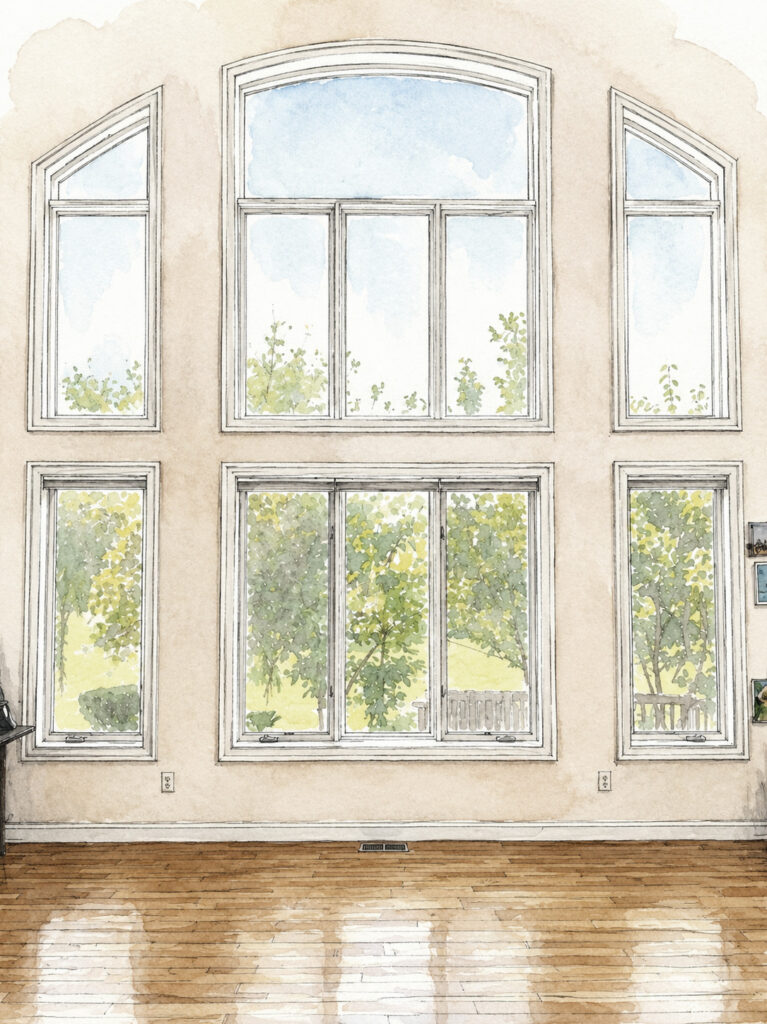
Without window treatments, the architecture is at its clearest.
The broad central arch and the angled side windows create a balanced composition, while the upper and lower rows establish a strong horizontal rhythm. The room feels open and bright, and the windows naturally become the main visual feature.
At the same time, the height of the glazing introduces practical considerations. Sunlight enters from different levels, privacy matters more at the lower windows, and the large expanse of glass can leave the room feeling slightly exposed.
Window treatments therefore become part of the architecture rather than an added decoration.
1. Roller Shades Only
Clear and Restrained
Roller shades make very little change to the original window shapes.
Each window remains visually independent, and the upper and lower sections can be controlled separately for light and privacy. The arches, angled edges, and surrounding millwork remain clearly visible.
This is the most restrained approach. The room feels calm, ordered, and close to its original architectural character.
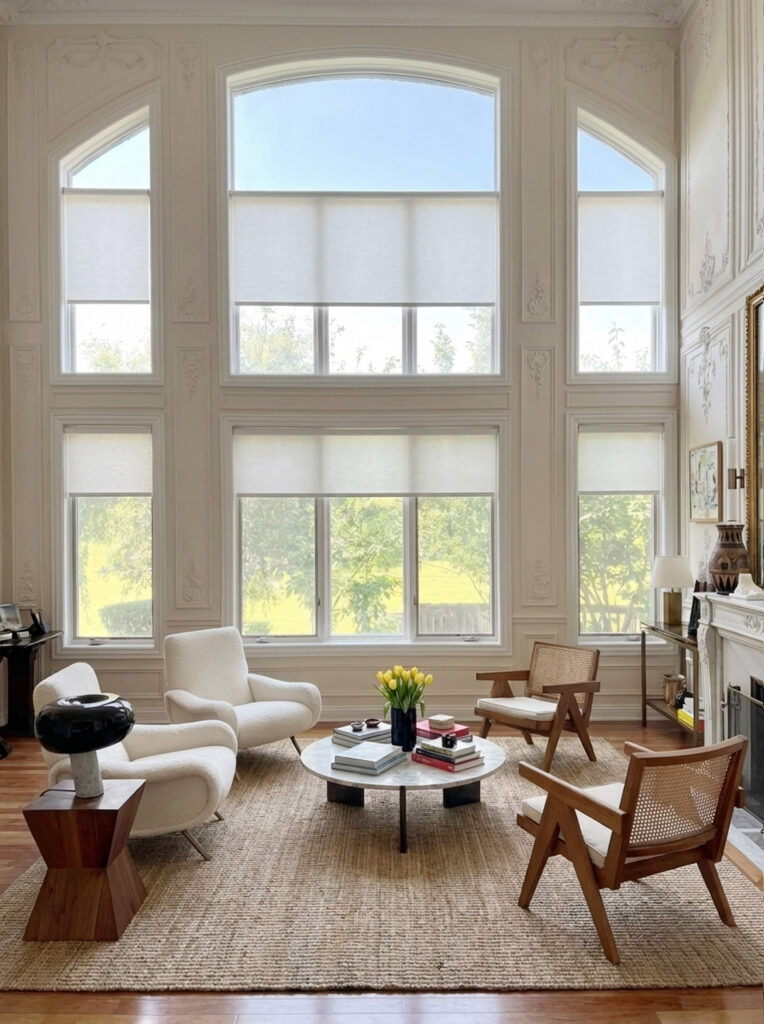
The shades are present, but they do not ask for attention.
2. Roman Shades Only
A Softer Rhythm Within the Window Frames
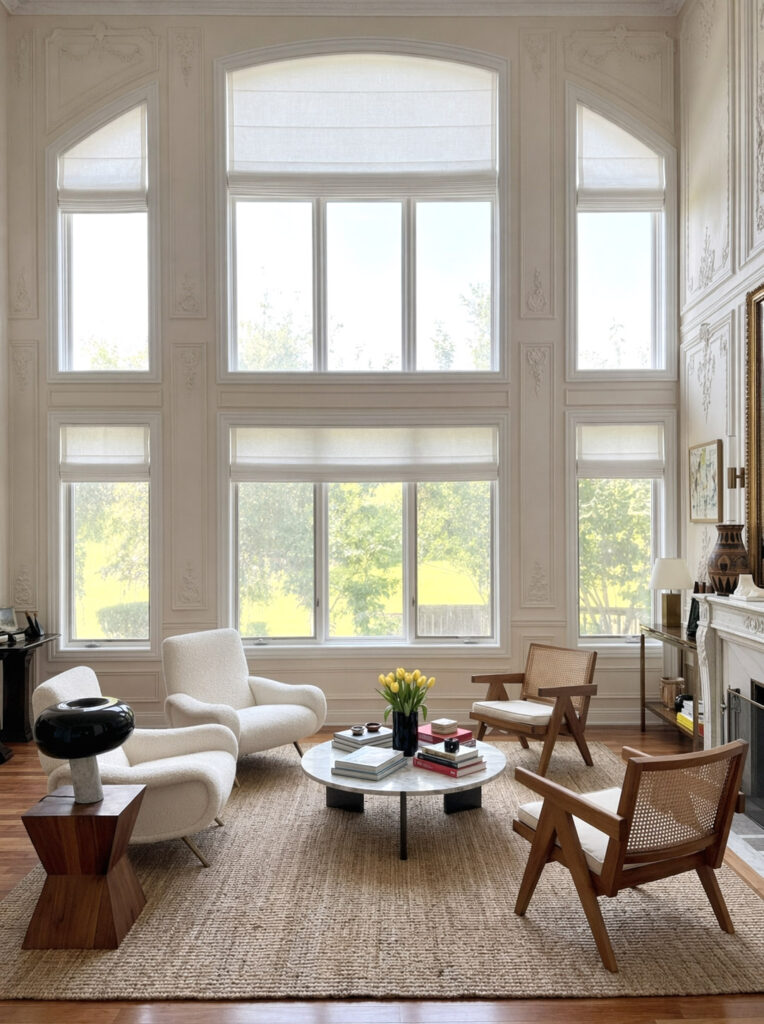
Roman shades follow the same idea of treating each window individually, but they introduce a softer, more textile-driven quality.
The folds add depth and a sense of comfort without hiding the shape of the windows. The architecture remains clearly defined, but the room feels less formal and slightly more lived-in.
Because several shades appear across the wall, their horizontal folds become part of the composition. The result is warmer and more decorative than roller shades, while still preserving the identity of each opening.
3. Sheer Drapery Only
Connecting the Window Wall with Light Vertical Lines
Full-height sheer drapery changes the way the wall is read.
Instead of focusing on each window separately, the eye begins to see the entire elevation as one composition. The sheer panels create long vertical lines that visually connect the upper and lower windows.
Because the fabric is light and translucent, it does not conceal the architecture. The arches and window frames remain visible through the material, while the overall wall feels softer and more continuous.
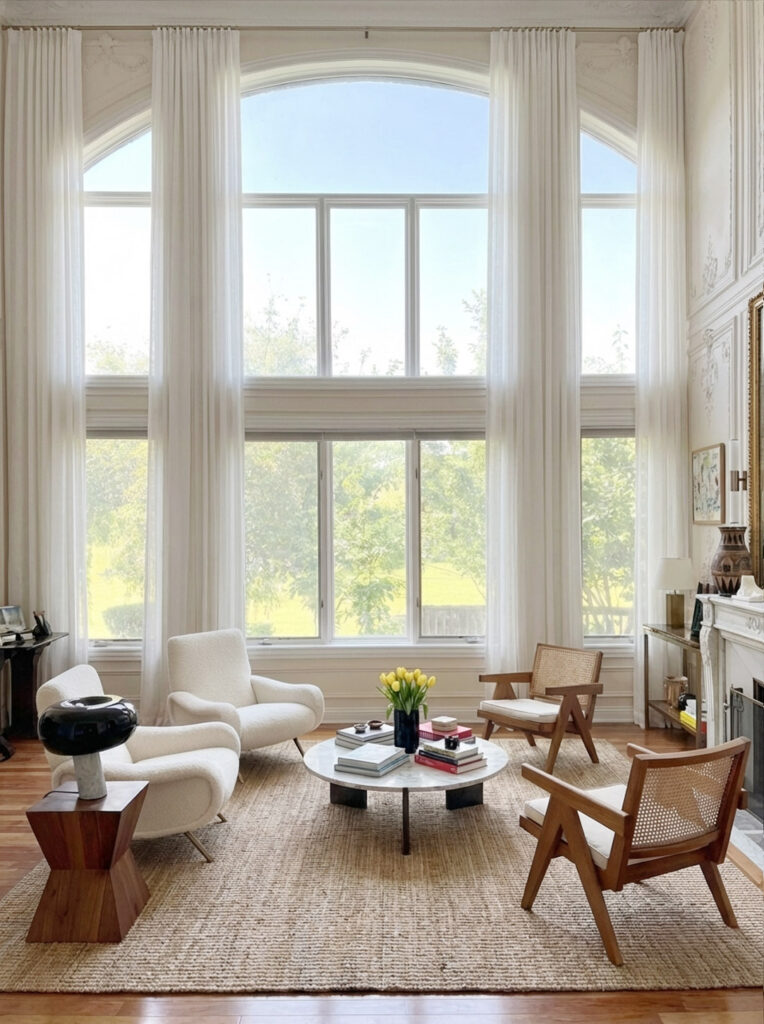
The space appears taller, lighter, and more complete.
4. Roller Shades + Sheer Drapery
Balancing Function with Lightness
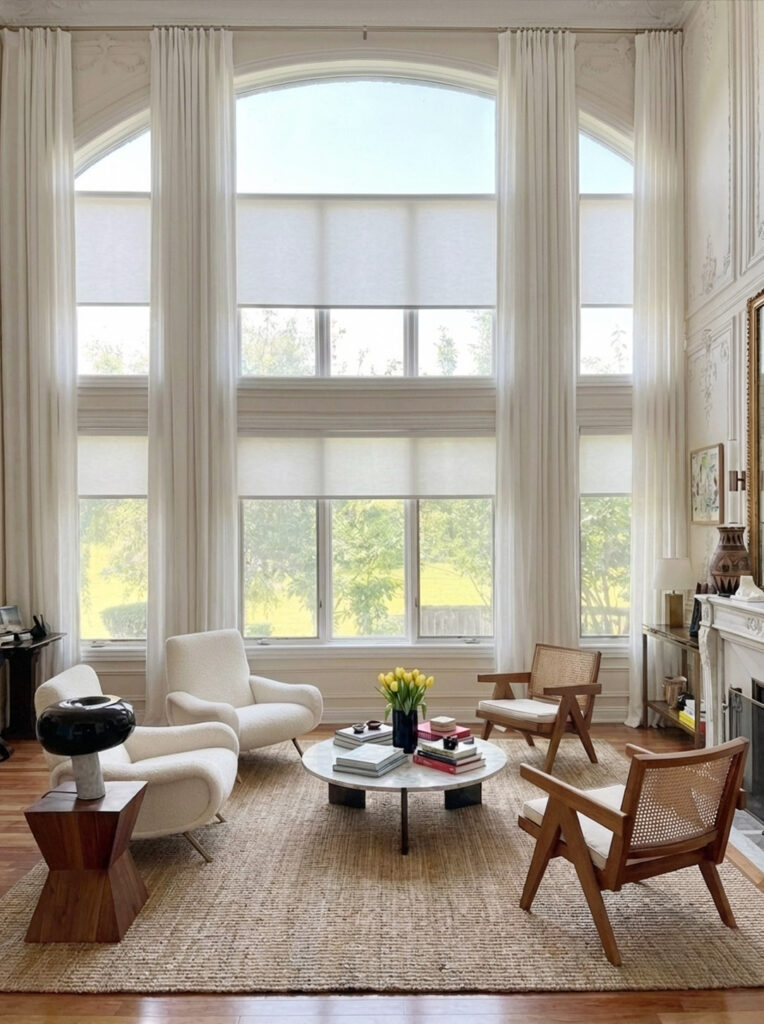
When roller shades and sheer drapery are layered together, the two treatments take on different roles.
The roller shades provide practical control over sunlight and privacy. The sheer drapery softens the wall and reinforces its vertical scale.
Compared with roller shades alone, the room feels more finished and more atmospheric. Compared with sheer drapery alone, the windows gain greater day-to-day flexibility.
Neither layer needs to dominate. One remains quiet and functional, while the other shapes the character of the room.
5. Cellular Shades + Drapery
Greater Weight and a Stronger Sense of Enclosure
Cellular shades combined with full drapery create a noticeably heavier and more grounded effect.
The cellular shades soften and diffuse the light while allowing each window group to function independently. The outer drapery adds visual weight and draws the many openings together with strong vertical lines.
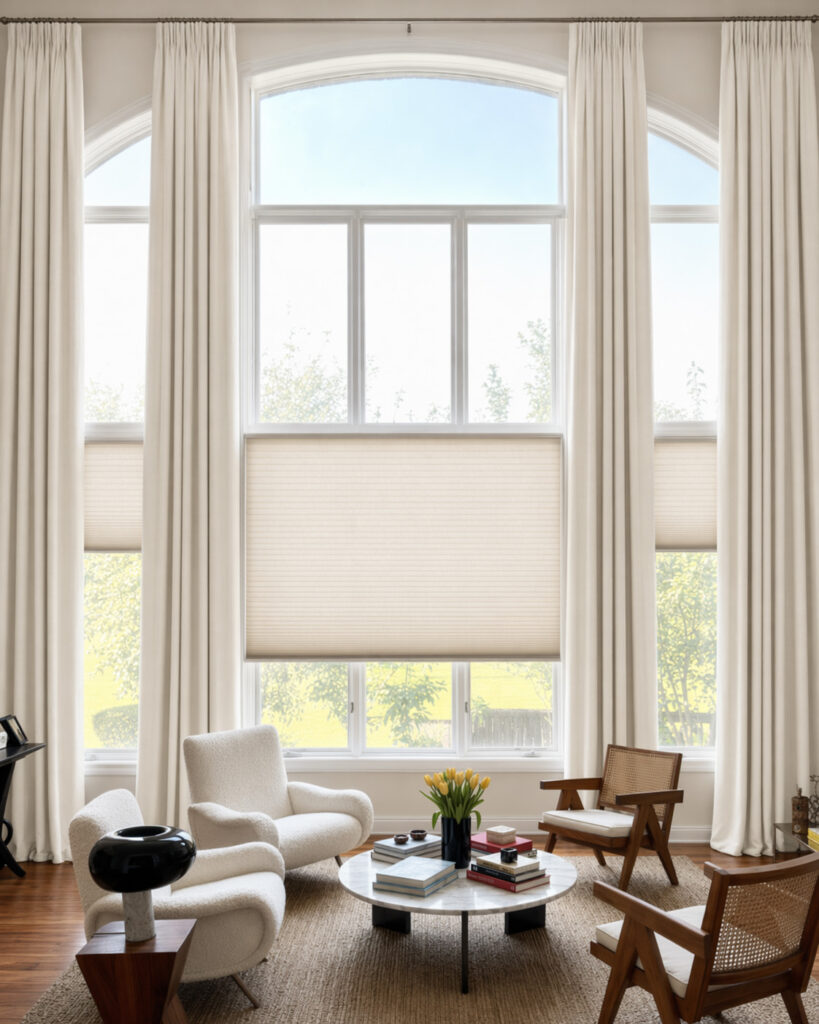
Unlike sheer drapery, the fuller fabric reduces the prominence of the window frames and gives the room a greater sense of enclosure. The large expanse of glass feels less exposed, and the tall room becomes calmer, more settled, and more intimate.
6. Woven Wood Shades + Sheer Drapery
Shifting the Focus from Structure to Material
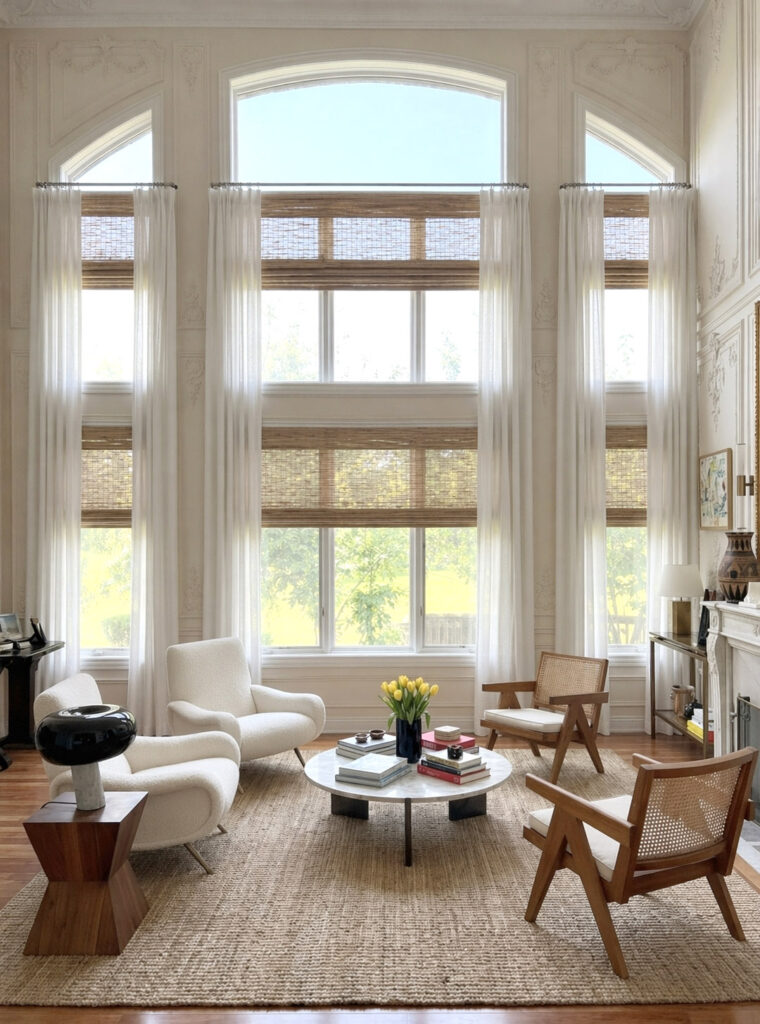
Woven wood shades bring a different quality to the same room.
Their natural texture adds warmth and variation, while the sheer drapery preserves the height and softness of the overall composition. Light passing through the woven material feels less uniform and more tactile.
Because the furniture, architecture, and viewpoint remain unchanged, the effect of the material becomes especially clear. The room feels more relaxed and organic, even though the overall treatment structure is similar to the earlier layered options.
Here, the window treatments are not only controlling light or organizing the wall. They are also contributing directly to the material language of the interior.
Designing Tall Windows Is Really About How the Wall Is Understood
Tall windows do not have one fixed solution.
Roller shades preserve architectural clarity. Roman shades introduce softness within each opening. Sheer drapery connects the wall with light vertical movement. Roller shades and sheers balance function with openness. Cellular shades and full drapery create more weight and enclosure. Woven wood shades and sheers bring warmth, texture, and a more natural atmosphere.
What changes the room is not simply the product selected.
It is the way the architecture, the light, and the window treatments are considered together.
Some window treatments cover a window.
Others redefine the entire wall.
Related Notes
If you’d like to continue exploring how window treatments can shape a space:
One Room, Many Window Treatments: A Visual Study of Style and Mood
See how different window treatment styles can change the character, proportion, and atmosphere of the same room.
Read the article →
Exploring Drapery Design: A Visual Guide to Styles, Details, and Combinations
Explore how drapery styles, layering, details, and fabric choices influence the finished space.
Read the article →
Roman Shade Styles – A Visual Reference Guide
A visual overview of common Roman shade styles and how different forms can influence the finished look.
Read the article →
How to Measure for Drapery
Move from visual planning into the practical measurements behind a finished drapery installation.
Read the article →