
Introduction
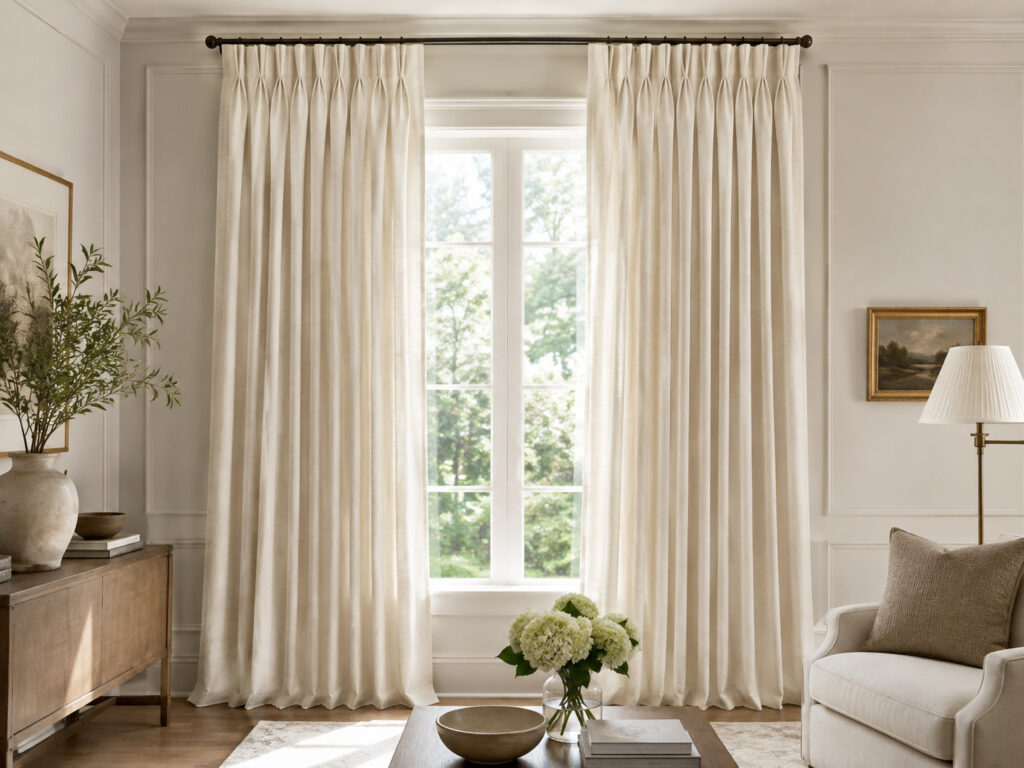
In custom drapery design, the heading style is more than a decorative detail at the top of a curtain.
It influences how the fabric folds, how fullness is expressed, how the drapery hangs, and how the entire window treatment feels within a space.
The same fabric and the same window can create completely different impressions depending on the chosen heading style. A tailored pleat can bring a classic and refined appearance, while a ripple fold can create a clean architectural look.
Understanding different drapery heading styles helps designers choose a construction that supports both the fabric characteristics and the overall design direction of the room.
What Is a Drapery Heading?
The drapery heading is the top portion of a curtain panel where the fabric is constructed and attached to a rod, track, or hanging system.
The heading determines:
- how the fabric gathers or folds;
- how the drapery hangs;
- the visual rhythm of the top edge;
- the overall style and formality of the window treatment.
Different heading styles can create very different expressions, from structured and tailored to soft and relaxed.
Common Drapery Heading Styles
French Pleat (Pinch Pleat)
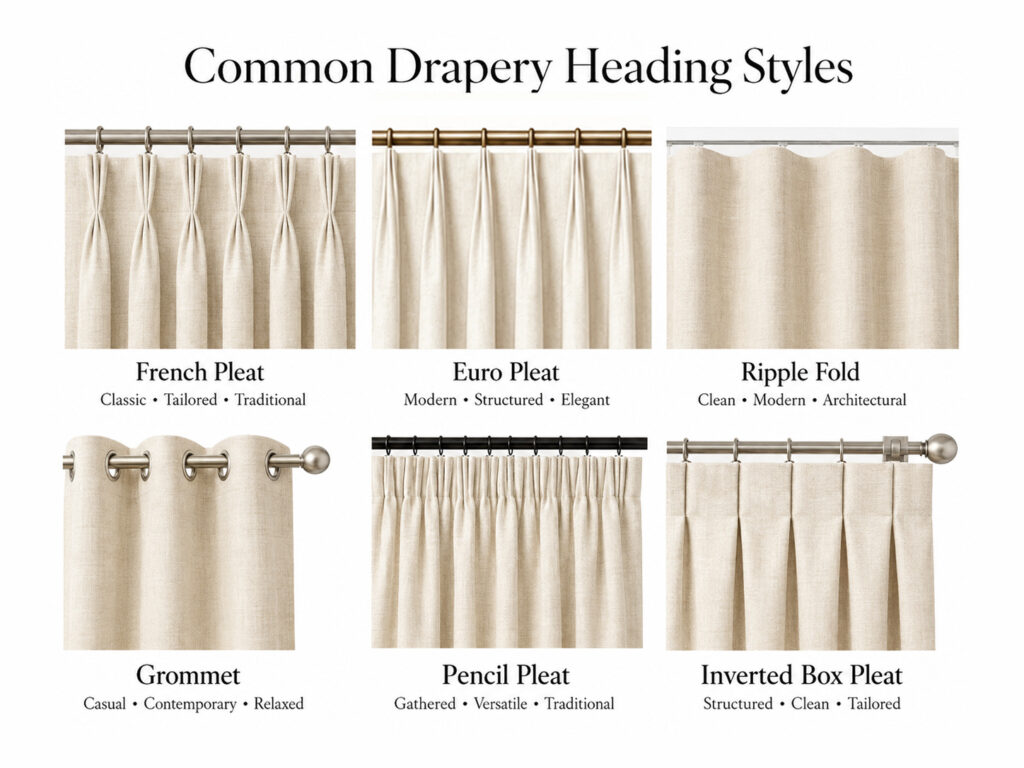
French Pleat, also known as Pinch Pleat, is one of the most classic and widely used custom drapery headings.
The fabric is gathered and pinched at the top to create evenly spaced folds, resulting in a structured and tailored appearance.
French Pleat is often associated with:
- Classic interiors
- Traditional design
- Refined custom window treatments
The final look can vary depending on pleat count, spacing, fullness, and fabric weight.
Common variations include:
Double French Pleat
Creates a cleaner and lighter fold expression with a simpler appearance.
Triple French Pleat
Creates a fuller and more decorative top treatment with a stronger traditional character.
Euro Pleat
Euro Pleat is a variation of pinch pleat that creates a softer and more open fold appearance.
Compared with French Pleat, Euro Pleat often has a more relaxed and contemporary expression while maintaining a tailored look.
It works well in:
- Modern classic interiors
- Transitional spaces
- Refined residential designs
Like French Pleat, Euro Pleat can be created with different pleat counts, including double and triple pleat variations.
Ripple Fold / Wave Curtain
Ripple Fold, also called Wave Curtain, is a popular choice for modern interiors.
Unlike traditional pleated headings, Ripple Fold creates continuous, evenly spaced waves through a track-based system.
Its clean and consistent folds create a minimal, architectural appearance.
Common fullness options include:
- 80% fullness
- 100% fullness
- 120% fullness
Lower fullness creates a simpler and more streamlined look, while higher fullness creates deeper waves and a softer, more luxurious appearance.
Grommet
Grommet drapery uses metal rings inserted directly into the fabric, allowing the panel to slide over a curtain rod.
This heading style creates large, relaxed folds and a casual appearance.
Grommet curtains are often used for:
- Contemporary interiors
- Casual residential spaces
- Designs that emphasize simplicity and ease
The final appearance is influenced by:
- ring spacing;
- rod diameter;
- fabric weight.
Pencil Pleat
Pencil Pleat creates a continuous row of small, evenly gathered folds along the top of the drapery.
Unlike pinch pleats, which create distinct folded groups, Pencil Pleat produces a softer and more uniform gathered effect.
It is known for being:
- Versatile
- Practical
- Traditional
Pencil Pleat is commonly found in both ready-made and custom drapery applications.
Inverted Box Pleat
Inverted Box Pleat creates a structured fold by turning the pleat inward, resulting in a cleaner and flatter front appearance.
This heading style provides a tailored and architectural feeling.
It works especially well with:
- Modern classic interiors
- Transitional designs
- Structured fabric choices
Additional Drapery Heading Styles
Goblet Pleat
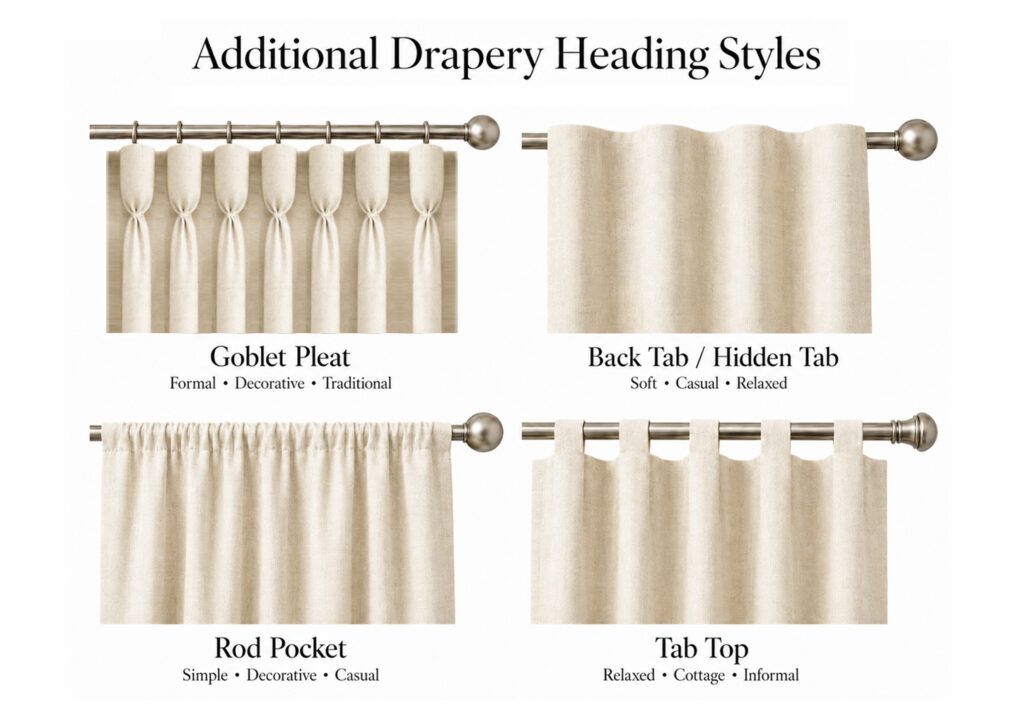
Goblet Pleat creates rounded, cup-like folds at the top of the drapery.
With its decorative and formal appearance, it is often used in traditional or elegant interiors.
Characteristics include:
- Formal
- Decorative
- Traditional
Back Tab / Hidden Tab
Back Tab drapery uses hidden fabric loops attached behind the panel, allowing the front surface to remain clean and uninterrupted.
This style creates a soft and relaxed appearance.
It is suitable for:
- Casual interiors
- Natural fabrics
- Relaxed residential spaces
Rod Pocket
Rod Pocket is one of the simplest drapery heading styles.
The curtain rod passes through a sewn pocket at the top of the panel, creating a gathered appearance.
It is commonly used for:
- Simple window treatments
- Decorative curtains
- Casual applications
Tab Top
Tab Top uses visible fabric loops that hang directly from the curtain rod.
The exposed tabs create a relaxed and informal look.
It is often associated with:
- Cottage style
- Casual interiors
- Natural design aesthetics
How Heading Style Changes the Overall Look
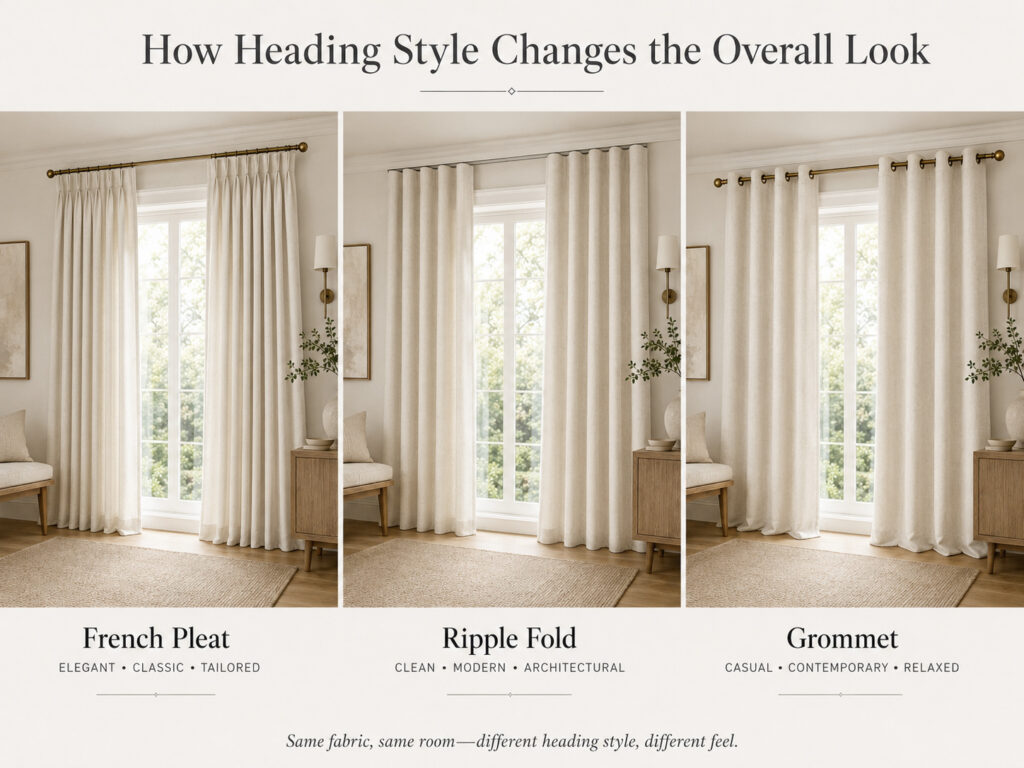
The heading style can significantly change the personality of a room.
The same fabric can feel:
Elegant and tailored with French Pleat,
Clean and architectural with Ripple Fold,
or
Casual and relaxed with Grommet.
Choosing a heading style is not only about appearance. It should also consider:
- interior style;
- fabric behavior;
- desired level of formality;
- functional requirements.
How Fullness Changes the Look of Drapery
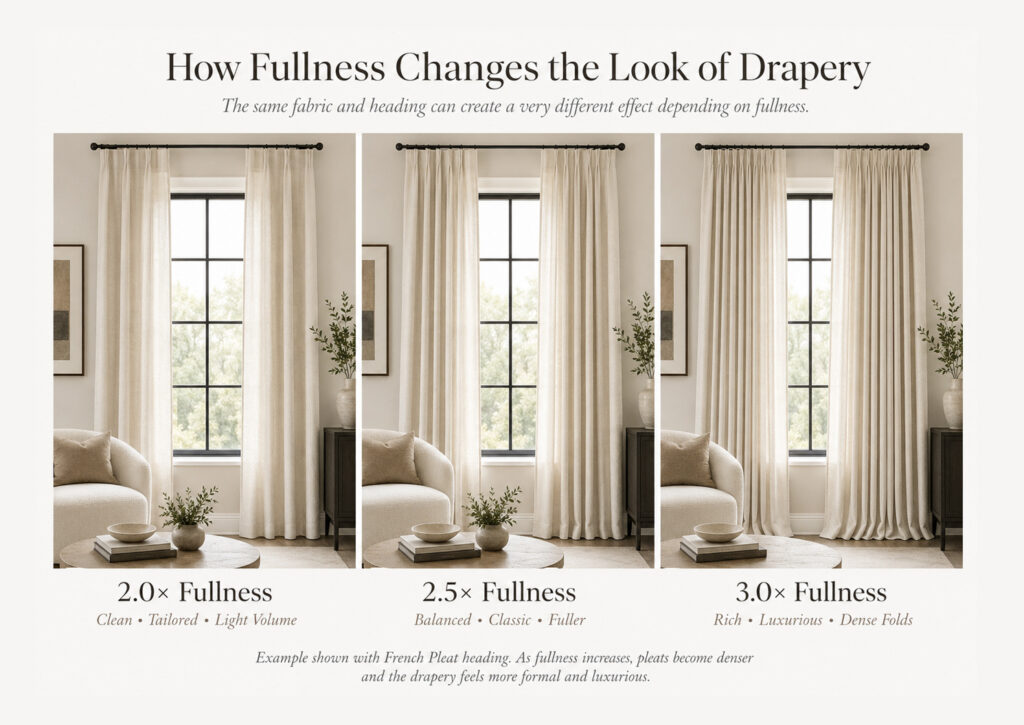
Heading style is only one part of the final drapery appearance. Fullness also plays an important role in determining the amount of fabric, fold density, and visual weight.
Using the same French Pleat heading as an example:
2.0× Fullness
Creates a cleaner and lighter appearance with fewer folds.
2.5× Fullness
Provides a balanced and classic look commonly used in residential projects.
3.0× Fullness
Creates richer folds and a more luxurious, formal appearance.
Fullness, fabric selection, and heading style work together to define the final character of custom drapery.
Conclusion
Drapery heading styles are not simply decorative choices. They define how fabric is structured, how folds are created, and how a window treatment communicates within a space.
From classic French Pleat to modern Ripple Fold, each heading style creates a different relationship between fabric, architecture, and interior style.
Understanding these differences allows designers to select a heading that supports both the function and the visual intention of the space.
Related Reading
→ Ripple Fold Drapery / Wave Curtain Guide
A closer look at ripple fold systems, fullness, carriers, and closure options.
→ Drapery Heading Styles
A Visual Reference Guide
→ Understanding Stationary Panels
A Decorative Approach to Window Design