
When people hear the word “curtains,” they often think of fabric panels hanging on both sides of a window. But in interior design, the term window treatments means much more than curtains.
A window treatment is any product or design element used to cover, frame, soften, decorate, or control a window. It can provide privacy, manage natural light, improve insulation, enhance the room’s proportions, or simply add beauty and personality to a space.
In other words, window treatments are not only about covering a window. They are about shaping the way a room feels.
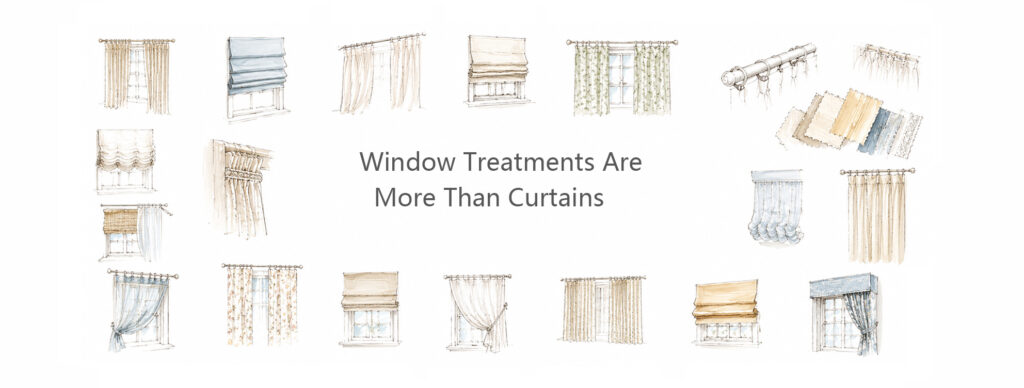
What Does “Window Treatment” Include?
Window treatments can include many different products, from soft fabric panels and Roman shades to blinds, shutters, valances, cornices, and layered combinations.
Some window treatments are mainly functional. They help block sunlight, protect privacy, reduce glare, or improve energy efficiency. Others are more decorative, adding softness, texture, color, and architectural detail to the room.
In high-end interior design, window treatments often combine both function and beauty.
Soft Window Treatments
Soft window treatments are usually made from fabric or textile-based materials. They bring warmth, movement, texture, and softness to a room. These treatments are especially important in spaces where the designer wants to create a more finished, comfortable, and layered atmosphere.
Common soft window treatments include fabric panels, Roman shades, sheer treatments, valances, swags, and other fabric-based decorative treatments.
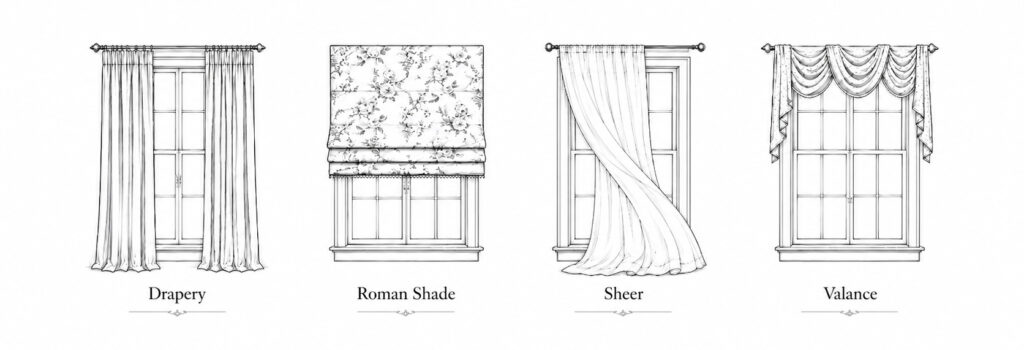
Fabric Panels: Draperies, Drapes & Curtains
Fabric panels are one of the most familiar forms of soft window treatment. In everyday language, many people call them curtains. In the custom window treatment industry, more tailored, often lined, and professionally made fabric panels are commonly referred to as draperies or drapes.
Depending on the fabric, heading style, lining, fullness, and hardware, fabric panels can feel casual, elegant, traditional, or highly customized. They may be functional, opening and closing for privacy and light control, or stationary, used mainly to frame the window and complete the room design.
Roman Shades
Roman shades are fabric shades that fold upward when raised. They offer a tailored look and can be made in many styles, from clean flat designs to softer, more relaxed forms.
Sheer Panels
Sheers allow natural light to filter into the room while softening the view and creating a light, airy feeling.
Valances and Swags
Valances and swags are decorative top treatments. They can hide hardware, add shape to the top of the window, and create a more traditional or layered look.
Hard Window Treatments
Hard window treatments are usually made from wood, metal, vinyl, bamboo, or structured materials. They often provide strong light control, privacy, and durability.
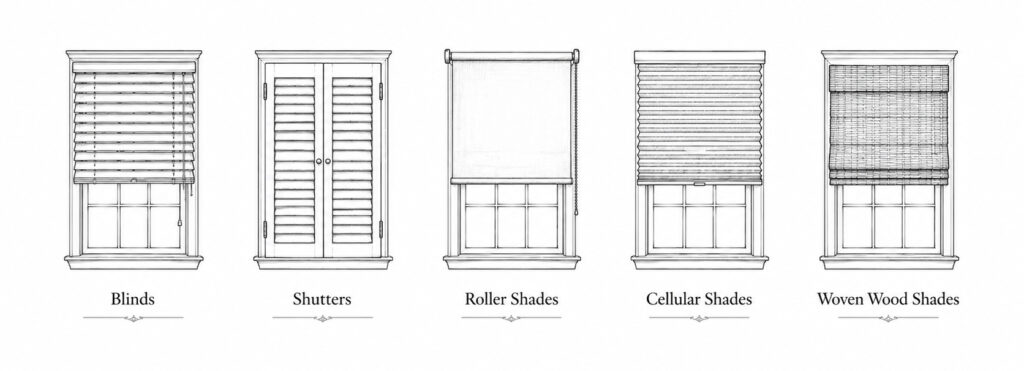
Common hard window treatments include:
Blinds
Blinds have slats that can tilt open or closed. They are practical and widely used for controlling light and privacy.
Shutters
Shutters are fixed or hinged panels with adjustable louvers. They give a clean architectural look and are often considered a long-lasting window treatment option.
Roller Shades
Roller shades are simple, clean, and modern. They roll up neatly and are often used in contemporary interiors.
Cellular Shades
Cellular shades, also known as honeycomb shades, are designed with air pockets that can help with insulation and energy efficiency.
Woven Wood Shades
Woven wood shades are made from natural materials such as bamboo, grasses, reeds, or fibers. They add texture and an organic feeling to the room.
Decorative vs. Functional Window Treatments
Not every window treatment serves the same purpose.
Some treatments are mainly decorative. For example, stationary side panels, valances, cornices, and swags may be used to complete the design of a room, frame the window, or add softness and proportion.
Other treatments are mainly functional. Roller shades, blackout draperies, blinds, shutters, and cellular shades may be selected for privacy, light control, insulation, or daily operation.
Many well-designed window treatments do both. A Roman shade, for example, can provide privacy and light control while also adding fabric texture and design detail. A pair of lined draperies can soften the room, improve acoustics, and create a more elegant finish.
Layered Window Treatments
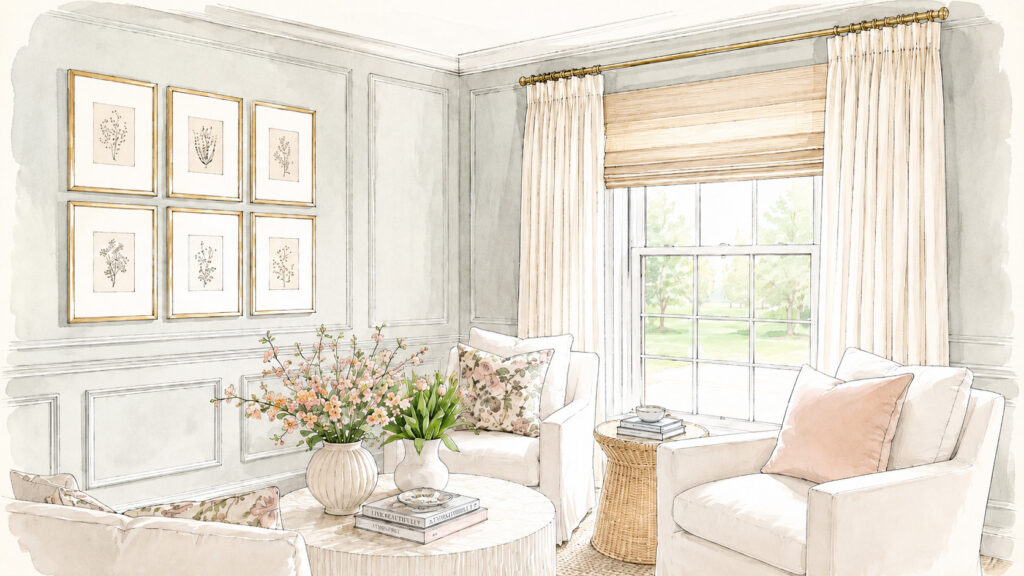
A Classic Layered Combination
This layered window treatment pairs the natural texture of woven wood shades with the softness of drapery panels. The result is a balanced look that offers warmth, depth, and a more finished interior style.
In many professionally designed homes, window treatments are layered.
A common combination is a Roman shade inside the window with drapery panels on the outside. The shade provides privacy and light control, while the drapery adds softness and height.
Another classic combination is sheer panels with heavier draperies. The sheers filter daylight during the day, while the draperies provide privacy and a more finished evening look.
Valances, cornices, and fabric top treatments can also be layered with shades or panels to create a more decorative and custom appearance.
Layering allows a window treatment to become more than a single product. It becomes part of the room’s architecture and design language.
How to Choose the Right Window Treatment
Choosing the right window treatment depends on several factors:
The amount of privacy needed
The direction and strength of sunlight
The style of the room
The window size and shape
The available wall space around the window
The desired level of softness or structure
The need for daily operation
The budget and level of customization
For a clean and tailored look, Roman shades, roller shades, or shutters may work well. For softness and elegance, draperies or curtains may be a better choice. For a layered designer look, a combination of shades, panels, and top treatments can create more depth and character.
Final Thoughts
Window treatments are an important part of interior design. They influence light, privacy, comfort, proportion, and atmosphere.
Whether simple or highly customized, the right window treatment can change the way a room looks and feels. It can make a space softer, warmer, more elegant, more practical, or more complete.
That is why window treatments should not be treated as an afterthought. They are part of the design story of the room.