
A quiet visual study of how different window treatments can change the feeling of the same room.
This article is not a product presentation. It is a design observation, using one simple sitting room to explore how drapery, shades, valances, and decorative top treatments influence proportion, light, softness, and mood.
By keeping the room, furniture, wall color, and window view the same, we can see more clearly how each window treatment changes the overall atmosphere of the space.
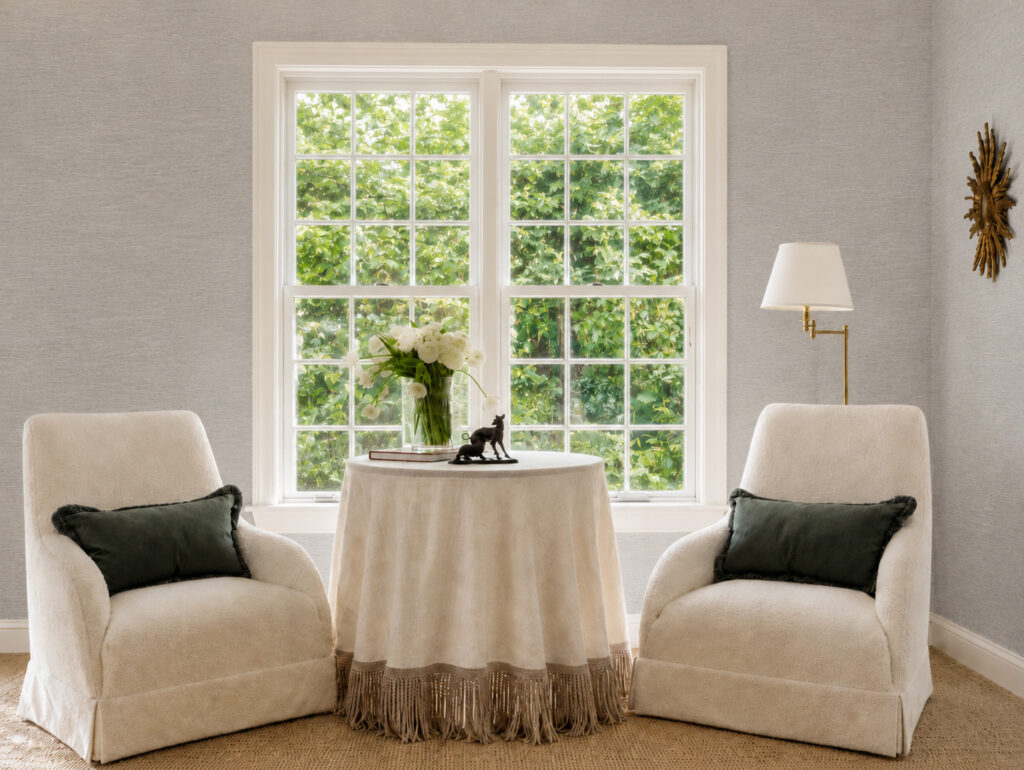
The Room Before Window Treatments
Without window treatments, the room feels open, bright, and uncomplicated. The window and the garden view become the main focus. However, the wall also feels slightly unfinished. Fabric, shade, or drapery can help soften the architecture and connect the window more naturally to the furniture.
• How Different Window Treatments Change the Room
Each treatment brings a different visual language to the same room. Some options feel simple and architectural, while others add softness, movement, or a stronger decorative presence. By comparing them side by side, we can better understand how window treatments affect proportion, light, mood, and the sense of completion within the space.
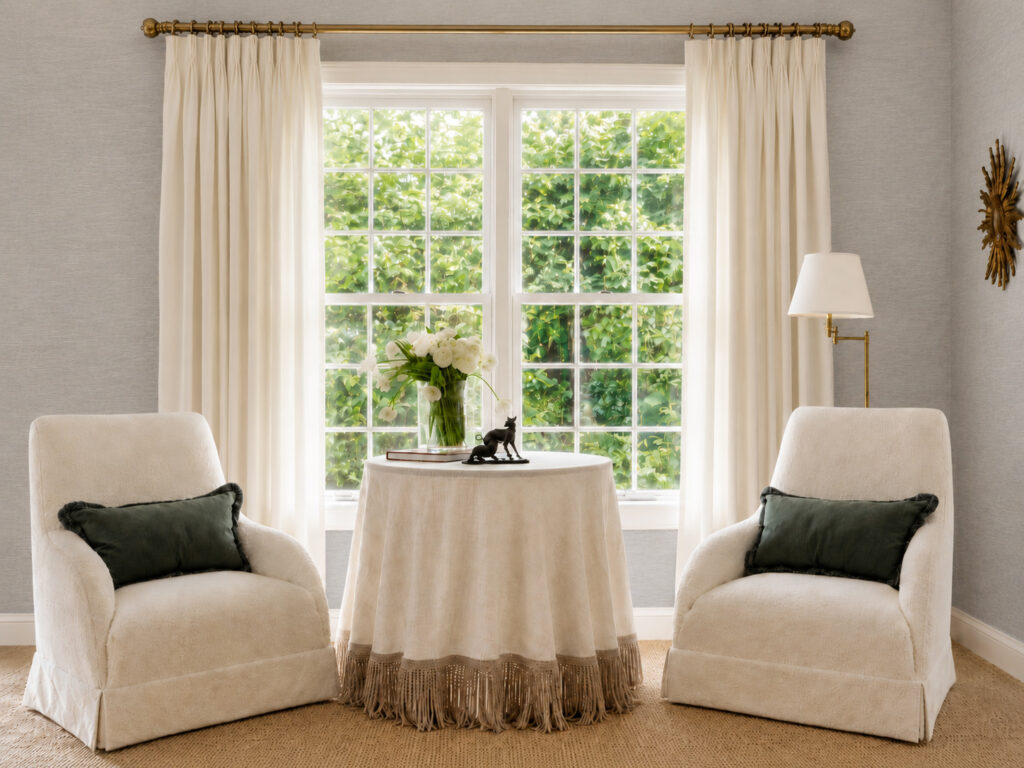
Simple Side Panels
Simple side panels soften the window wall and add vertical emphasis without making the room feel heavy.
They frame the view, connect the window to the seating area, and give the space a more finished look.
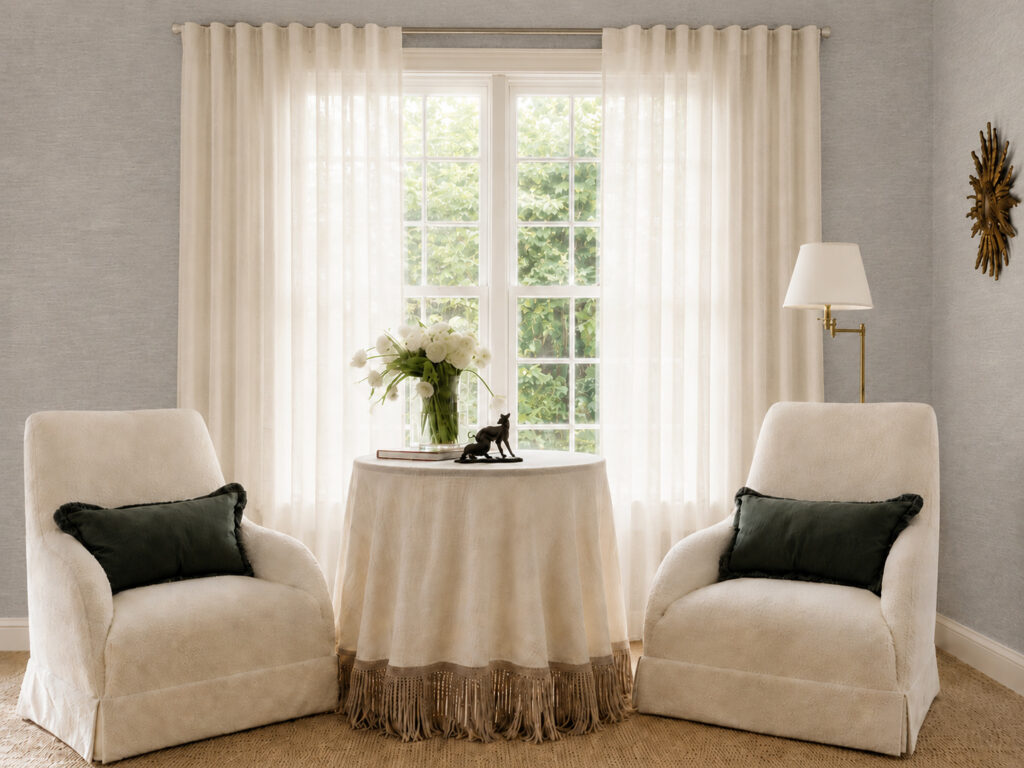
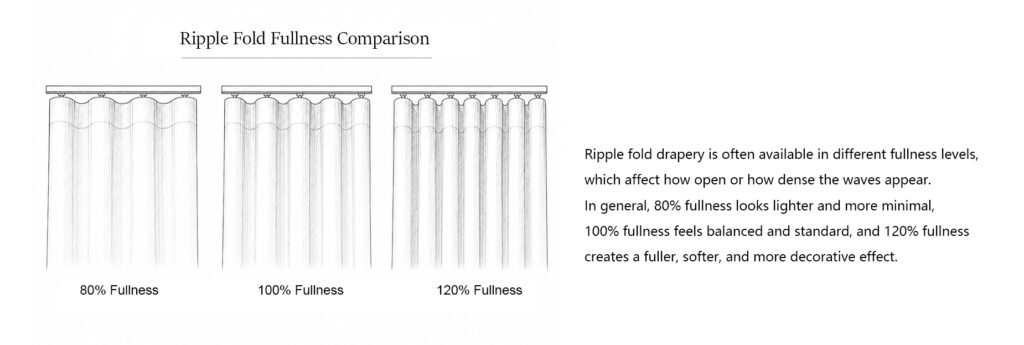
Ripple Fold Drapery
Ripple fold drapery creates a softer, more contemporary rhythm across the window.
The even vertical waves keep the room bright and relaxed while adding movement, scale, and quiet softness.
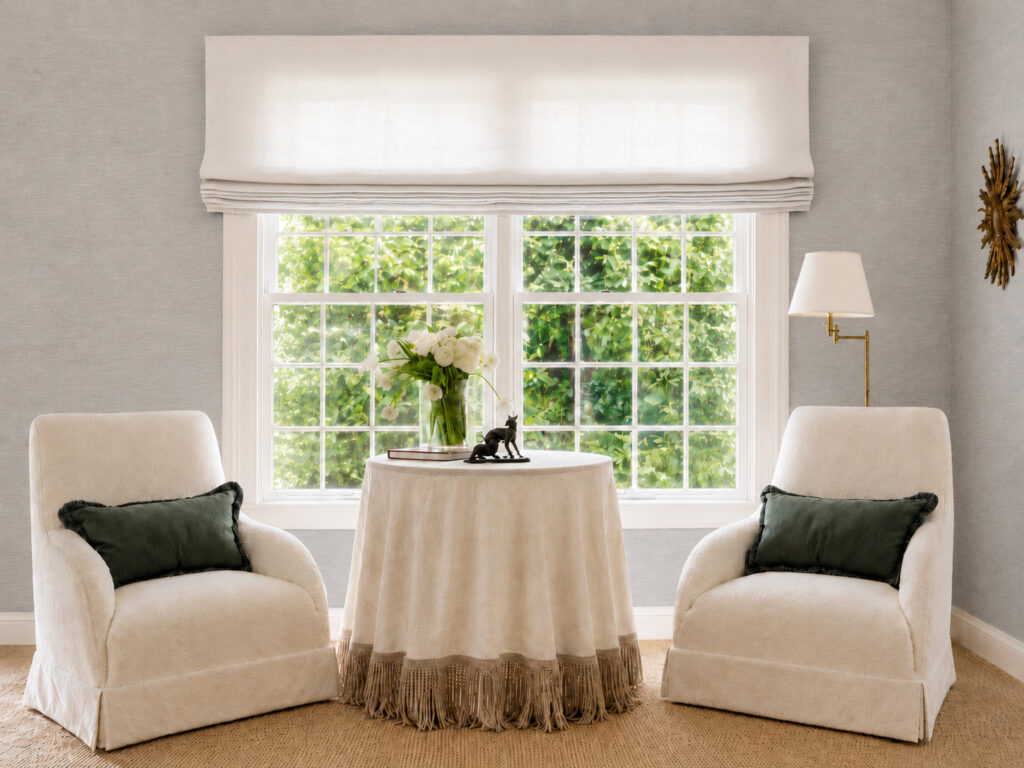
Roman Shade
A Roman shade gives the window a clean, tailored structure. It stays close to the frame, making the room feel calm, orderly, and more architectural. The soft fabric still adds warmth, while the horizontal folds bring a quiet rhythm and practical light control.
Relaxed Roman Shade with Side Panels
A relaxed Roman shade softens the window with a gentle curved lower edge. It feels less formal than a flat Roman shade and adds a more graceful, casual mood. Paired with side panels, the treatment becomes more layered and complete, adding height,softness, and a stronger connection to the seating area.

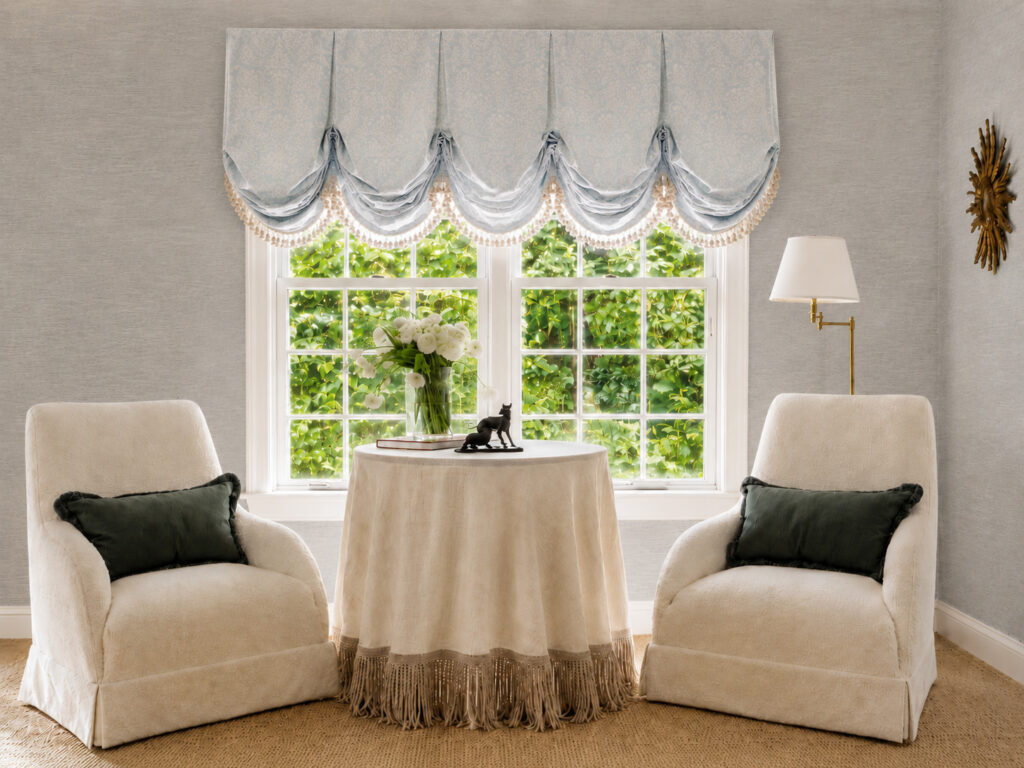
Balloon Shade
A balloon shade adds a more decorative and romantic character to the room. Its gathered fabric and softly curved lower edge create volume, movement, and a gentle sense of softness. Because it does not fully cover the window, the room still feels bright while the shade becomes a graceful decorative focal point.
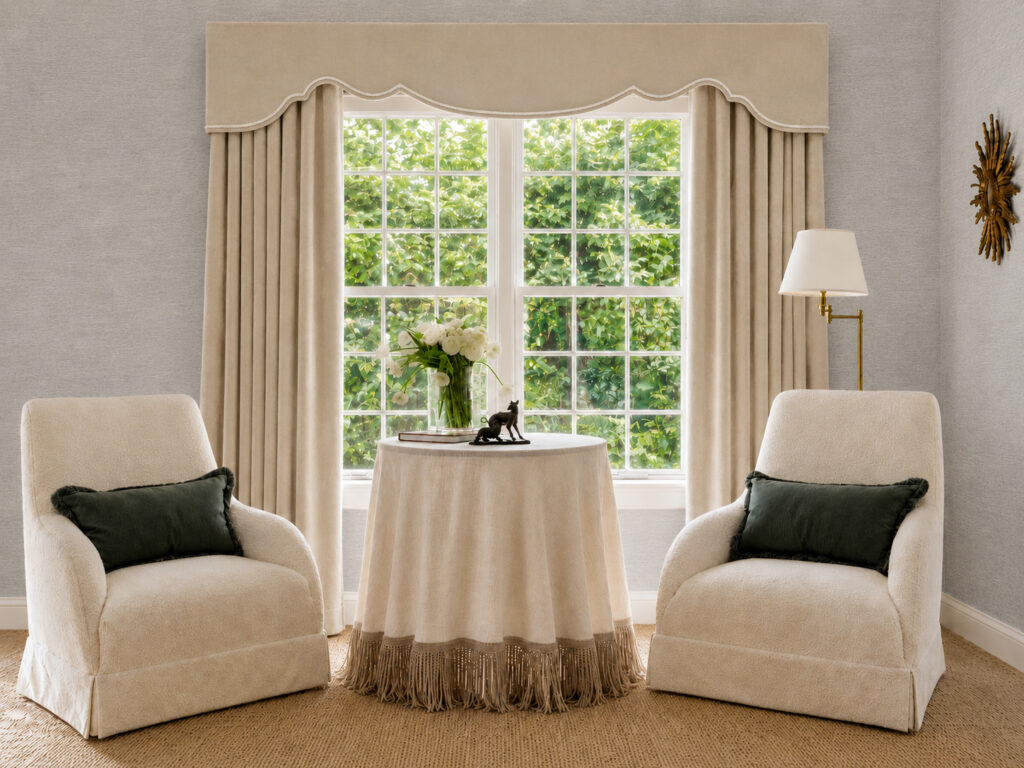
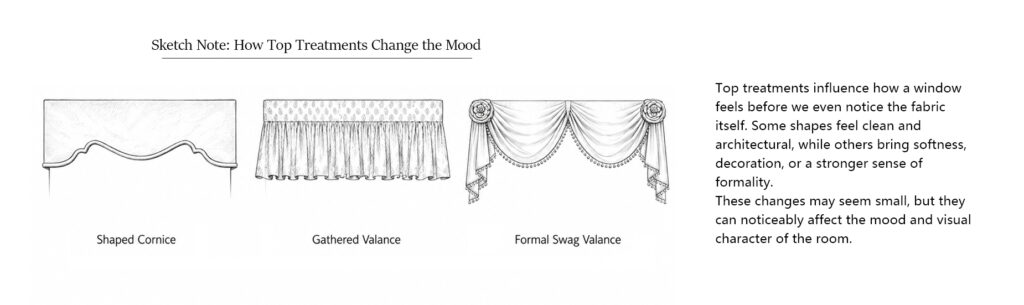
Cornice with drapery
A cornice with drapery gives the window a more tailored and architectural frame. The structured top treatment defines the window, while the side panels add softness and length. In this room, the cornice makes the treatment feel custom, finished, and more formal without overwhelming the space.
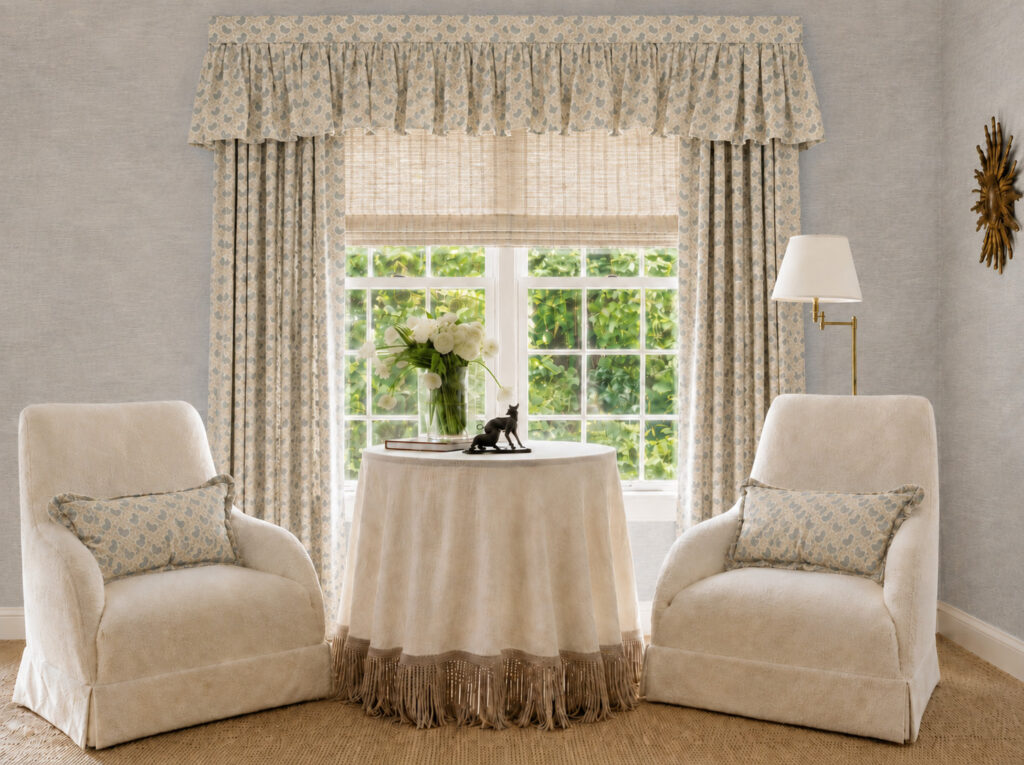
Patterned Drapery
Patterned drapery adds personality and a stronger decorative rhythm to the room. Even a quiet pattern can make the window feel more connected to the furnishings.When the pillow fabric or color is coordinated with the drapery, the space feels more intentional and complete.
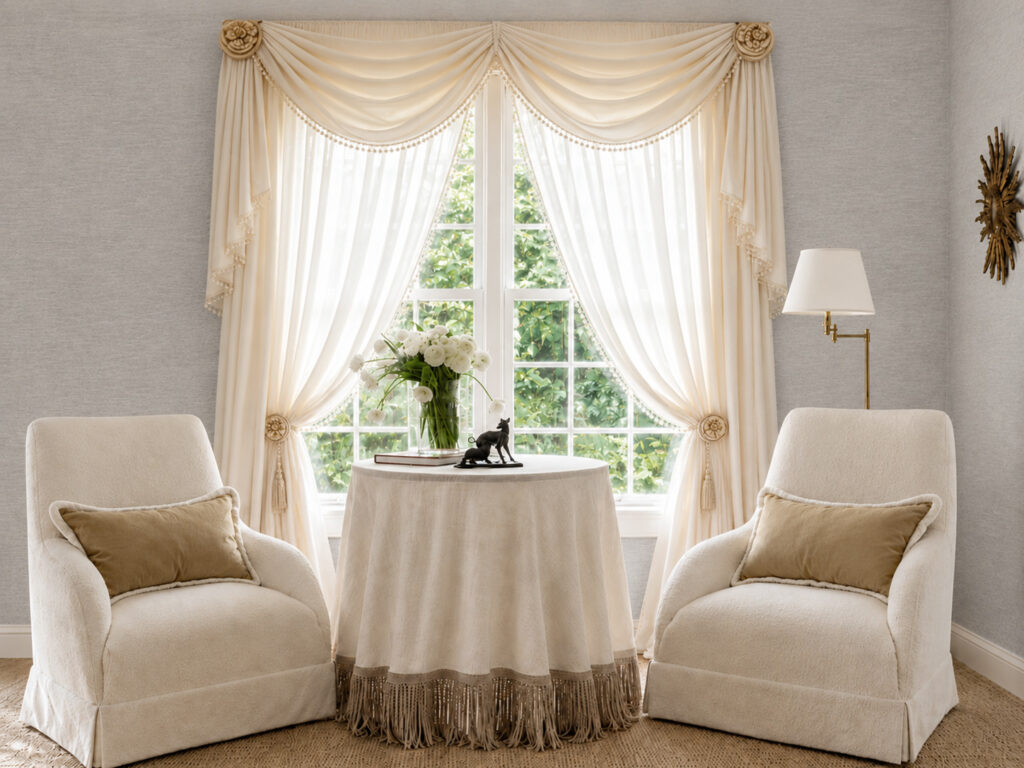
Formal Swag Drapery
Formal swag drapery brings a more traditional and decorative character to the room. The layered fabric and shaped swags create softness, richness, and a stronger focal point around the window. This treatment works best when the scale and fabric weight are carefully balanced, so it feels graceful rather than overwhelming.
• What These Treatments Change
Looking at the same room through different window treatments makes one thing clear: the window treatment is not a minor finishing detail. It has the power to change how the entire room feels.
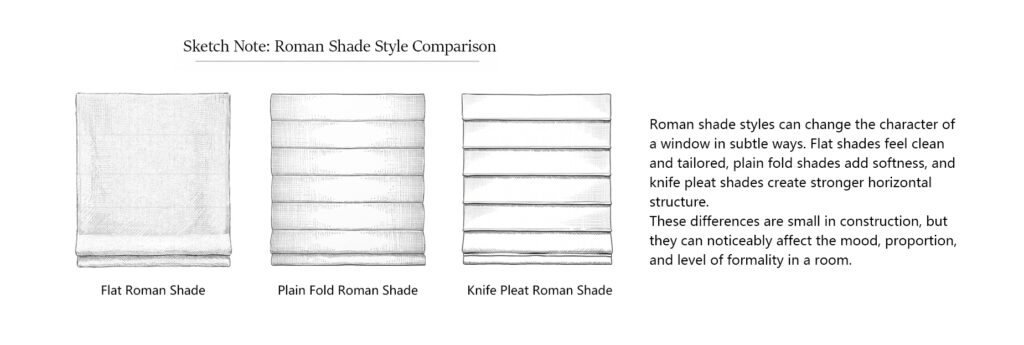
Simple drapery panels add softness and height. Ripple fold drapery creates a quieter, more contemporary rhythm. Roman shades bring structure and light control. Balloon shades, cornices, patterned fabrics, and formal swags add stronger decorative character.
Each option changes the relationship between the window, the wall, the furniture, and the natural light. The right choice depends not only on the window itself, but also on the mood, proportion, and level of formality the room needs.
Window treatments do more than cover glass — they shape mood, softness, proportion, and completion.
• Final Observation
There is no single correct window treatment for a classic sitting room. A clean Roman shade, a simple pair of side panels, or a more decorative swag treatment can all work beautifully when the scale, fabric, color, and surrounding furnishings are considered together.
The value of this visual study is not to choose one “best” option. It is to show how much influence window treatments have on the atmosphere of a room. With thoughtful planning, fabric becomes more than decoration — it becomes part of the room’s architecture, rhythm, and emotional tone.
Related Notes
If you’d like to explore some of these window treatments in more detail:
Exploring Drapery Design: A Visual Guide to Styles, Details, and Combinations
Explore how drapery styles, details, layering, and fabric choices can shape the overall design of a window.
Read the article →
Roman Shade Styles – A Visual Reference Guide
A visual overview of common Roman shade styles and how their different forms influence the finished look.
Read the article →
Understanding Valances: Styles, Structure & Mounting
A closer look at valance styles, structure, mounting methods, and how they work with other window treatments.
Read the article →
Swags, Cascades, Jabots & Tails
A visual introduction to the traditional decorative elements used in more formal window treatments.
Read the article →