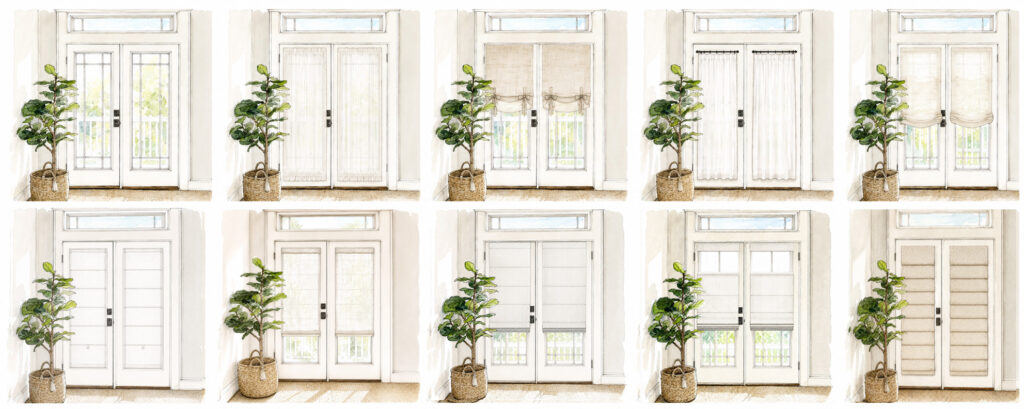
French doors bring natural light, architectural character, and a sense of openness to a room. Their large glass panels can also create practical concerns, including privacy, glare, and heat control.
Treating a French door is different from treating a standard window. The fabric is mounted directly on a moving door, so the treatment must remain stable, clear the handle, and sit neatly within a relatively narrow space. The way the fabric projects from the glass also matters, especially when the door is used frequently.
Using the same pair of French doors as a visual reference, this article compares nine fabric treatment options. The focus is limited to soft treatments, including fabric panels, small curtains, and Roman shades.
Simple Fabric Door Panels
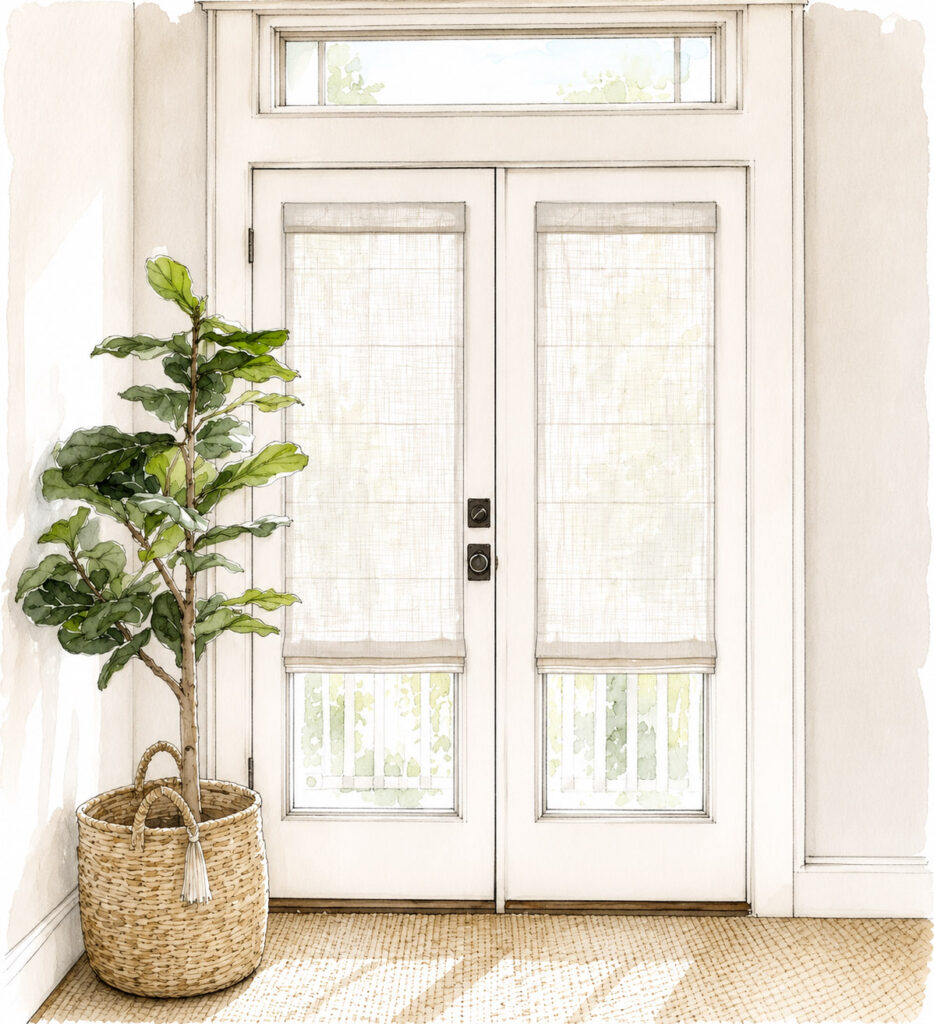
Tensioned Sheer Panel
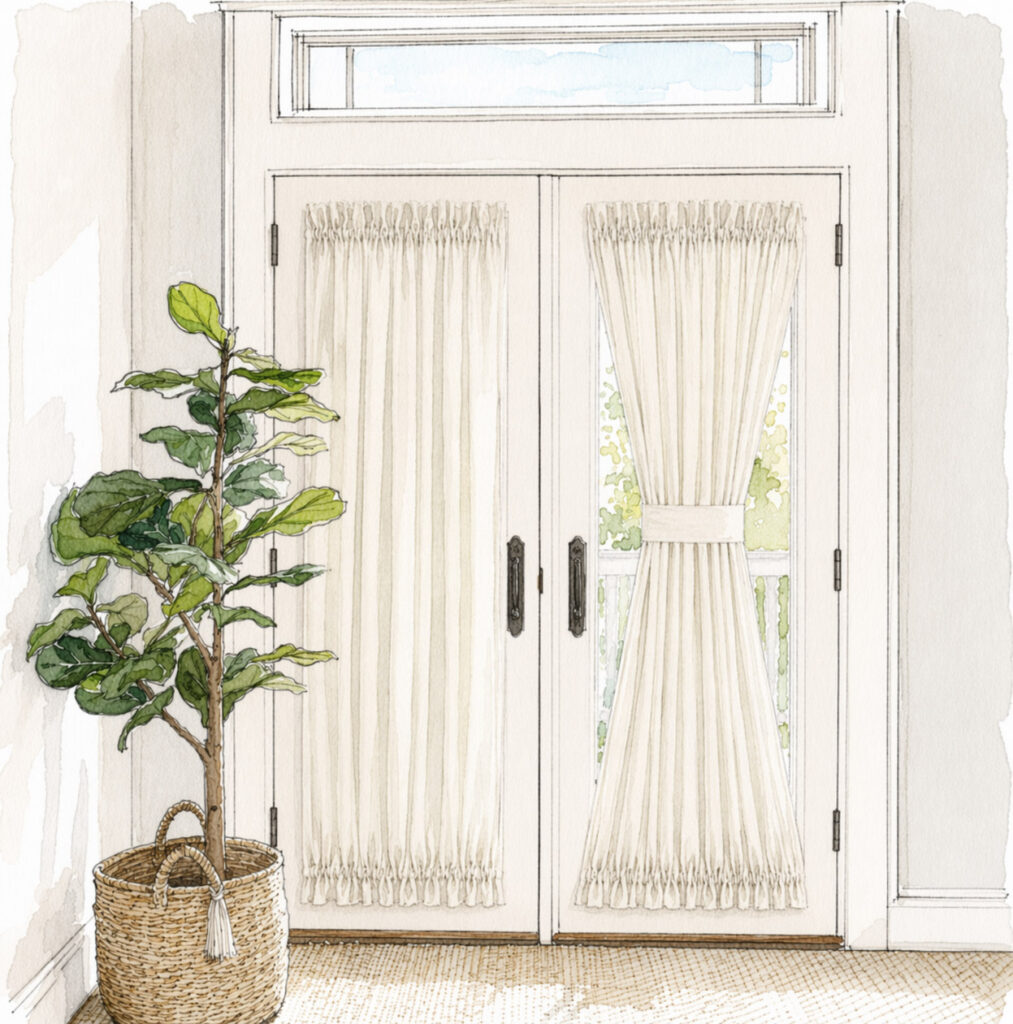
A tensioned sheer panel is one of the lightest treatments for a French door. The fabric is secured close to the glass, usually at both the top and bottom, which helps keep it stable when the door opens and closes.
This treatment softens daylight, adds a degree of privacy, and preserves the visual lightness of the door. It works especially well when the goal is to soften the glass without giving the fabric a strong decorative presence.
Rod-Mounted Door Curtain
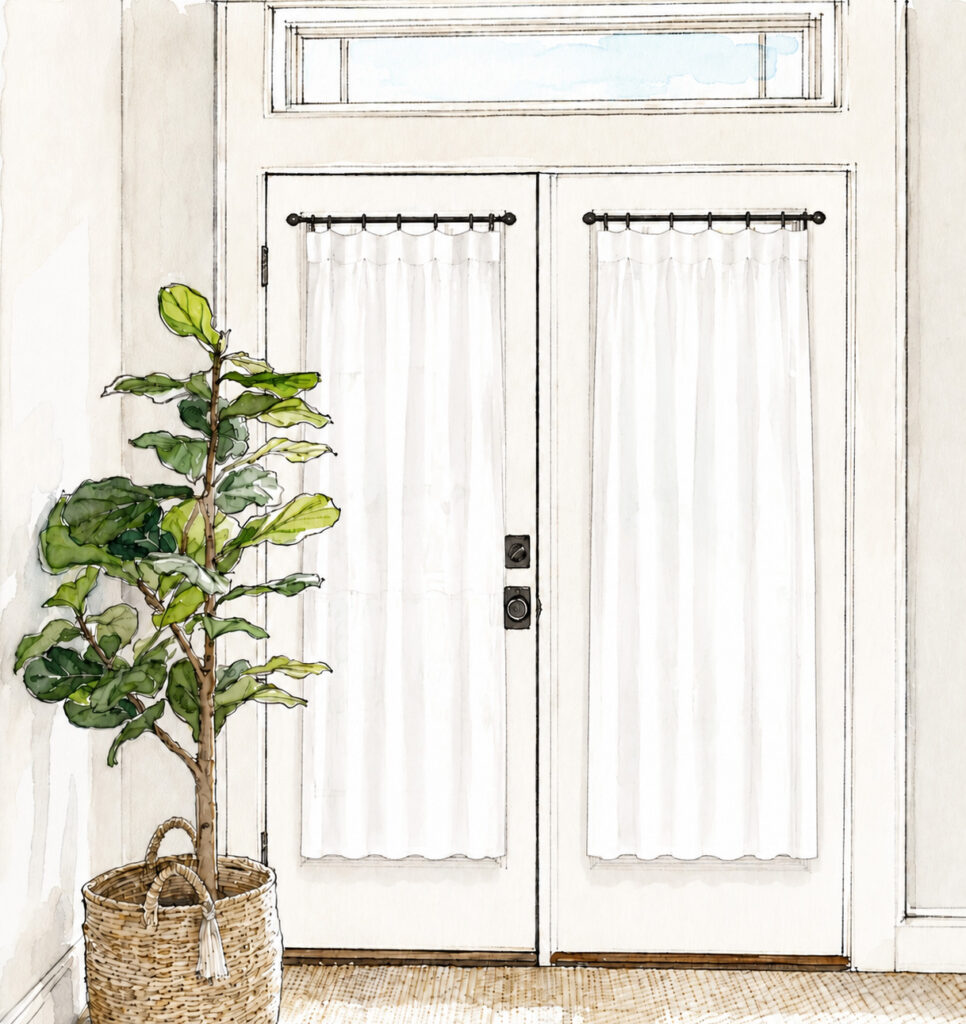
Small rods mounted directly on the door create a treatment that feels more like a miniature drapery panel. The gathered fabric introduces more fullness and movement than a tensioned panel.
This style can make the door feel softer and more connected to the other textiles in the room. Because the fabric hangs more freely, handle clearance and movement around the door frame should be considered carefully.
Hand-Adjusted Decorative Treatments
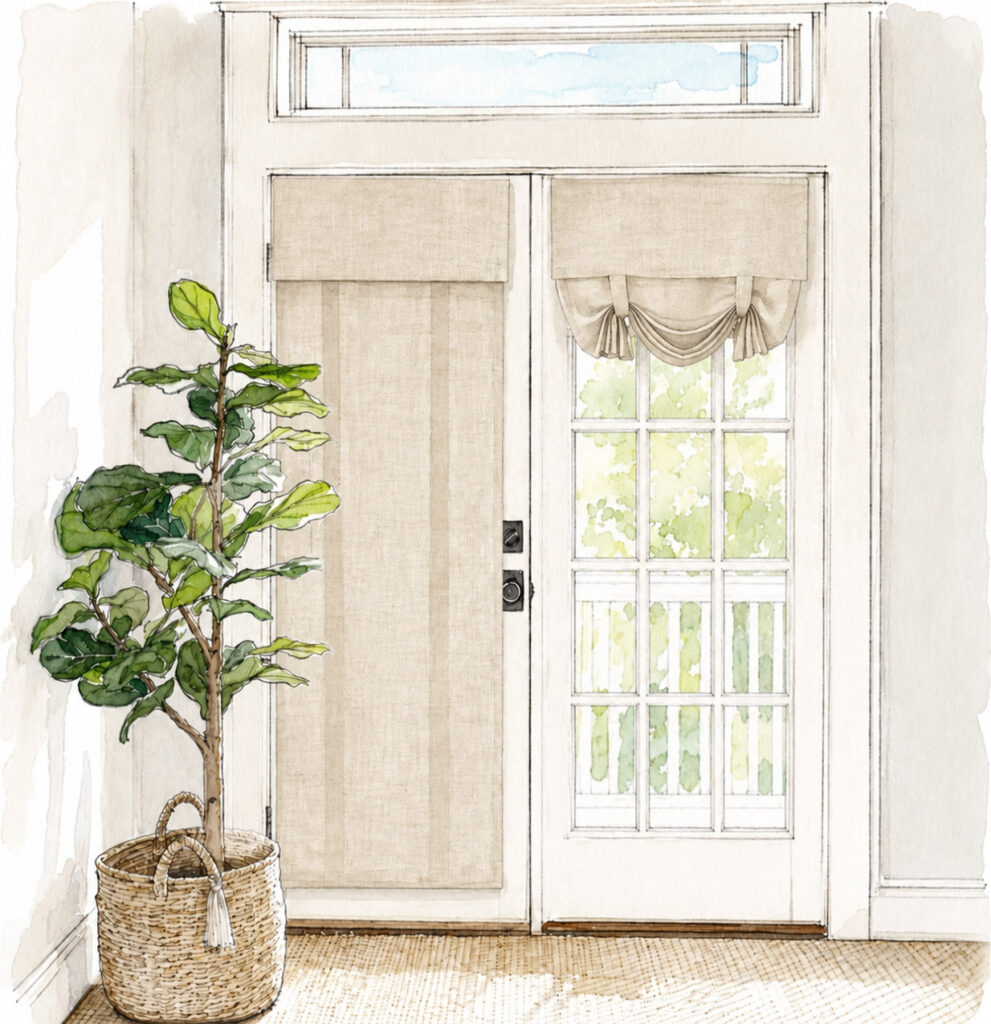
Manual Fold-Up Door Panel
A manual fold-up panel is fixed at the top, while the lower portion hangs freely. To raise it, the fabric is folded upward by hand and secured with fabric straps using hook-and-loop fasteners.
The visible straps and hand-formed folds are part of the design. This gives the treatment a relaxed, handcrafted quality rather than the appearance of a conventional lifting shade.
It is best suited to doors where the panel is adjusted only occasionally.
Magnetic Roman Shade
A magnetic Roman shade is also raised by hand, but concealed magnets hold the fabric at different heights.
This creates a cleaner appearance than a manual fold-up panel because the operating method is less visible. It offers a practical cord-free solution for occasional privacy and light adjustment while keeping the front of the shade relatively simple.
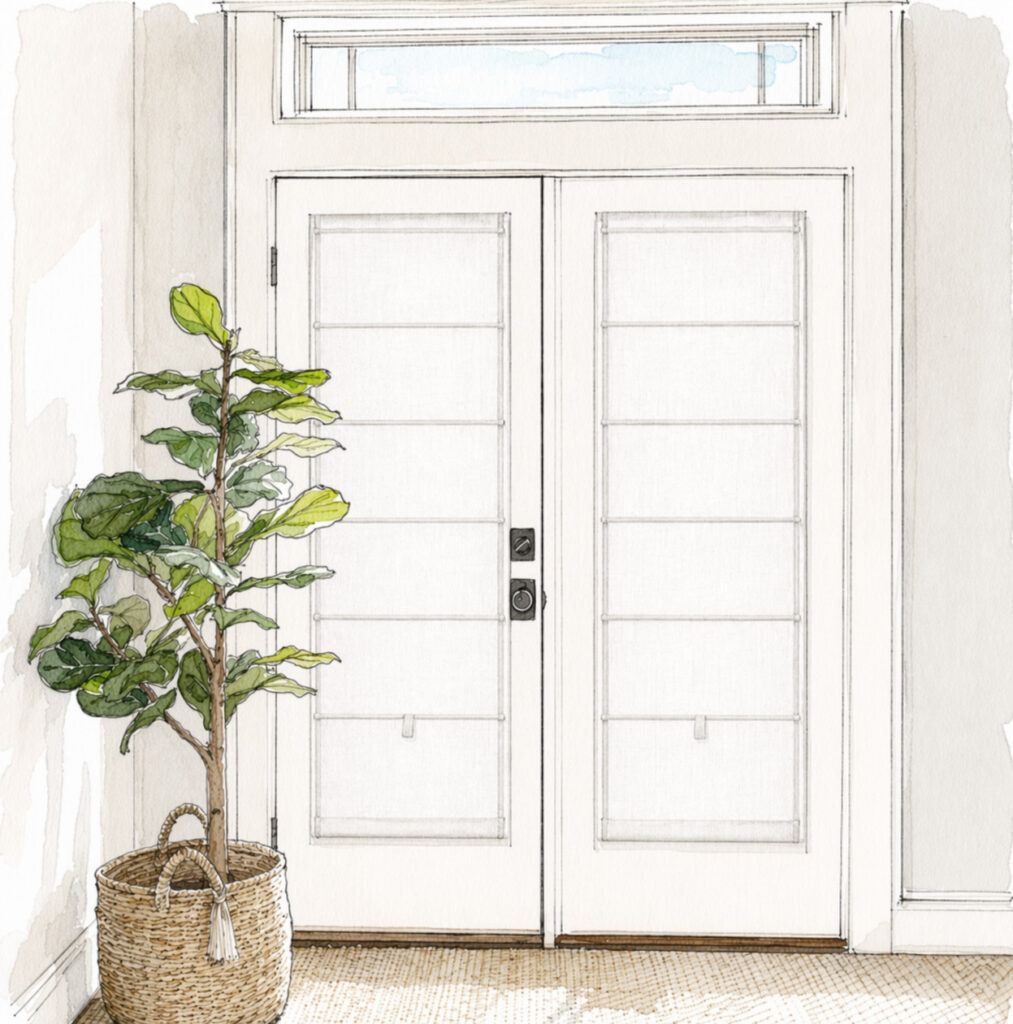
Roman Shade Options for French Doors
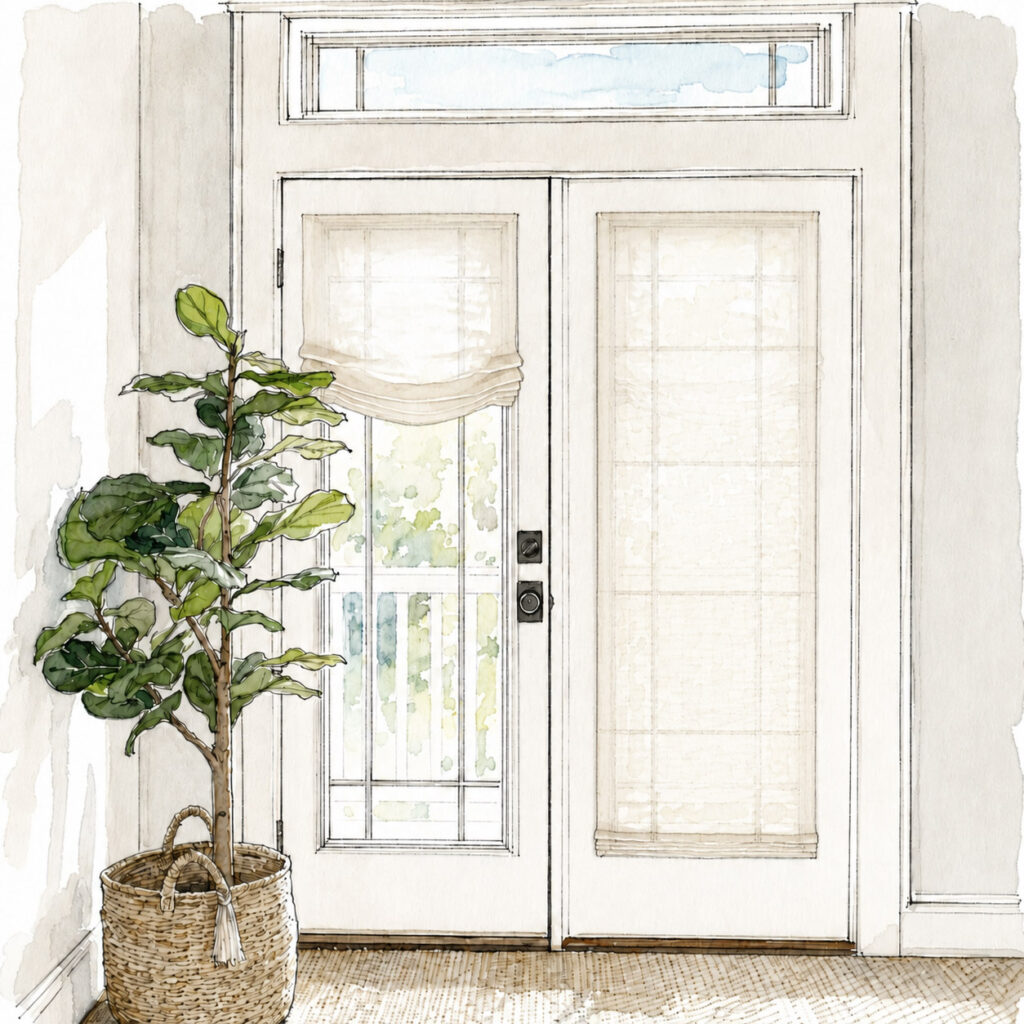
Soft Roman Shade
A soft Roman shade is usually made from lightweight fabric or sheer.
When fully lowered, the shade lies relatively flat. As it is raised, the lower section forms a gentle curve. The shape is therefore created by the lifting action rather than by a permanently curved bottom edge.
This style works best with fabrics that drape easily. It gives the door a softer and less structured appearance than a tailored Roman shade.
Valanced Roman Shade
A valanced Roman shade combines a compact shade body with a decorative front valance.
In this construction, the shade body sits behind the headrail, allowing it to remain closer to the glass. The valance is mounted on the front of the headrail, where it conceals the system and adds a finished decorative detail.
Compared with a waterfall Roman shade, this treatment is flatter, more tailored, and more closely fitted to the door.
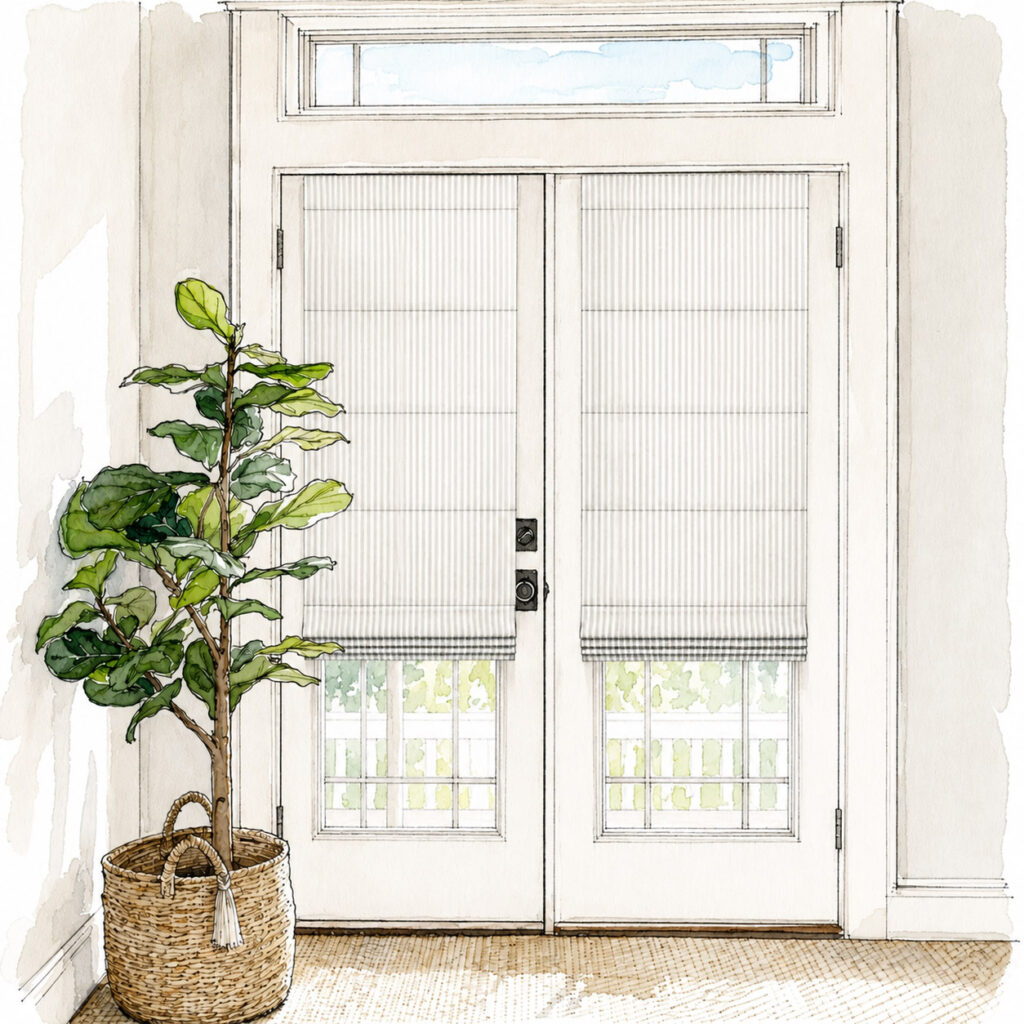
Waterfall Roman Shade
A waterfall Roman shade has soft horizontal folds that remain visible across the face of the treatment.
These folds project farther from the glass and create more depth, shadow, and fabric presence than a flatter shade. The result is softer and more decorative, but also more substantial.
This style works well when the fabric is intended to become a visible design feature rather than simply provide coverage.
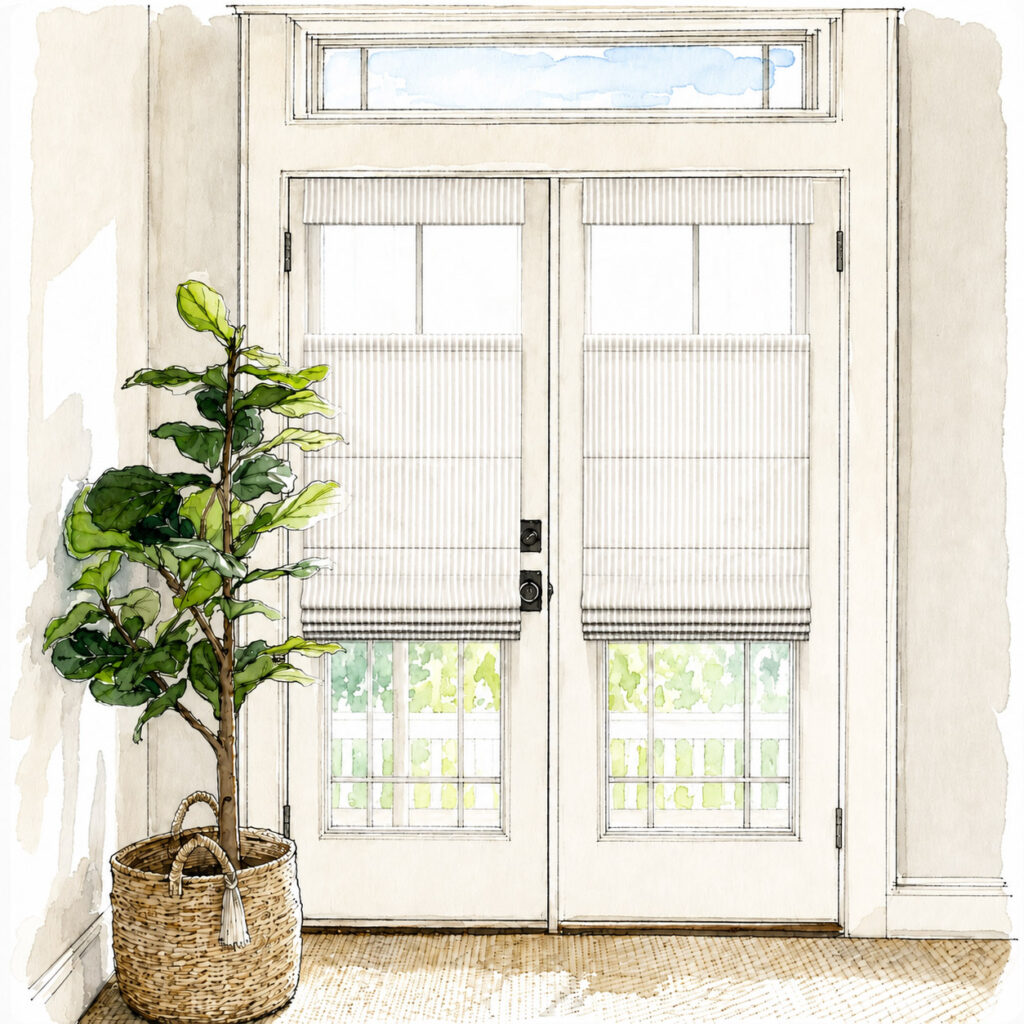
Top-Down/Bottom-Up Roman Shade
A top-down/bottom-up Roman shade provides the greatest flexibility for balancing privacy and daylight.
The shade can be lowered from the top, raised from the bottom, or positioned to cover the central portion of the glass. This is particularly useful for doors facing a street, shared outdoor area, or neighboring property.
Because the system is more complex, careful planning is needed to ensure that the shade fits within the available door space and clears the handle.
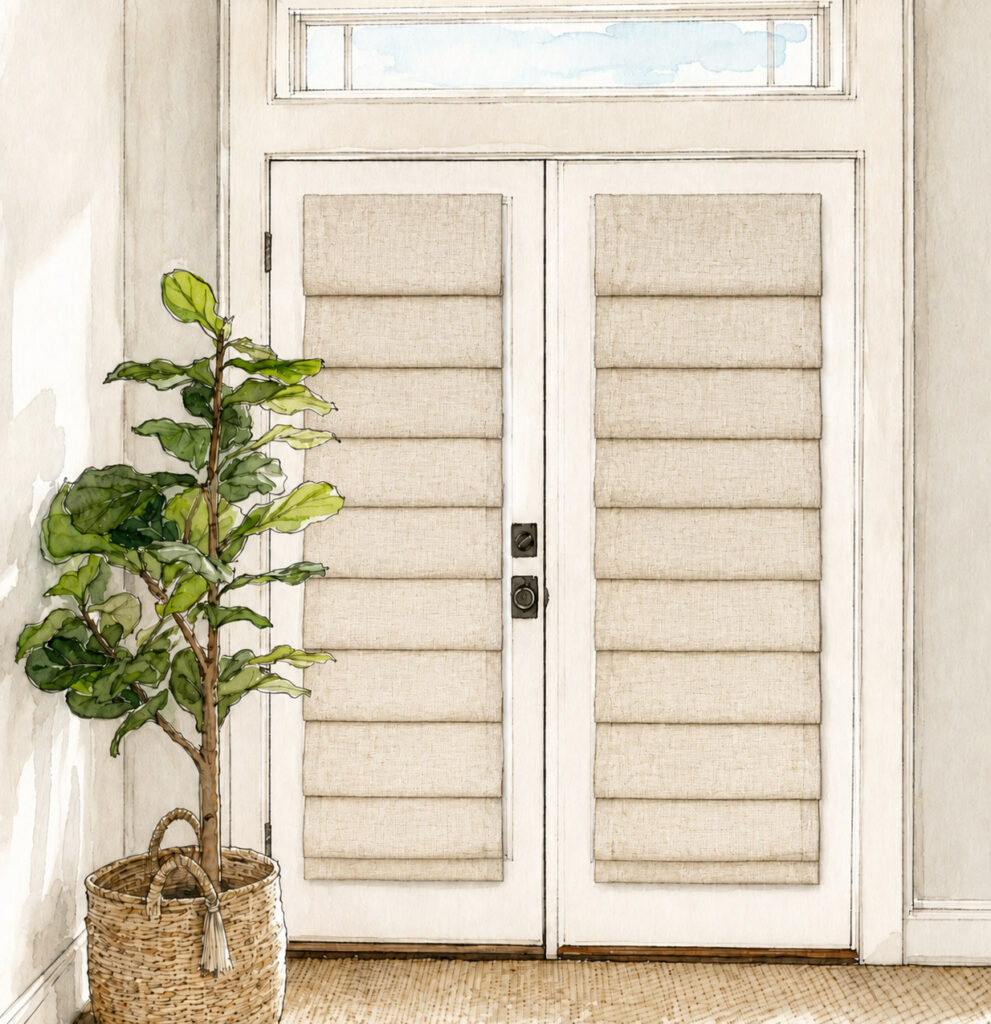
Hobbled Roman Shade
A hobbled Roman shade retains a series of full horizontal folds even when completely lowered.
The continuous folds create a rich, layered appearance and give the treatment a stronger decorative presence. It also requires more fabric and projects farther from the glass than a flat Roman shade.
This style is best suited to interiors where softness, depth, and a more traditional character are intentional.
Choosing the Right Treatment
The most suitable option depends on how the door is used and how strongly the fabric should influence the room.
A tensioned sheer panel is ideal for light filtering and subtle privacy. Rod-mounted curtains create a softer, more drapery-like effect. A manual fold-up panel adds visible handwork, while a magnetic Roman shade offers a cleaner hand-operated solution.
Among the Roman shade options, the soft Roman shade feels light and relaxed. The valanced Roman shade offers the closest and most tailored fit to the glass. Waterfall and hobbled shades create greater depth and decoration, while the top-down/bottom-up system provides the most flexible privacy control.
Before making a final choice, it is important to consider handle clearance, projection from the glass, frequency of operation, fabric weight, and the movement of the door itself.
Final Thoughts
A fabric treatment for a French door is not simply a smaller version of a window covering.
It must work with a moving door, fit within limited space, and remain visually balanced against the glass and hardware. At the same time, it can completely change the character of the doorway.
The most successful treatment is the one that brings together function, proportion, fabric behavior, and the right level of softness for the room.
Related Notes
If you’d like to explore some of these window treatment ideas in more detail:
Roman Shade Styles – A Visual Reference Guide
A visual overview of common Roman shade styles and how different forms can work across a range of window and door applications.
Read the article →
How to Measure for Roman Shades
A practical guide to the measurements and site conditions to consider when planning inside- and outside-mount Roman shades.
Read the article →
Understanding Valances: Styles, Structure & Mounting
Explore valance styles, construction, mounting approaches, and how valances can be combined with other window treatments.
Read the article →
Café Curtains Guide
A closer look at café curtains, including their proportions, mounting approaches, and use as a light, partial-coverage fabric treatment.
Read the article →